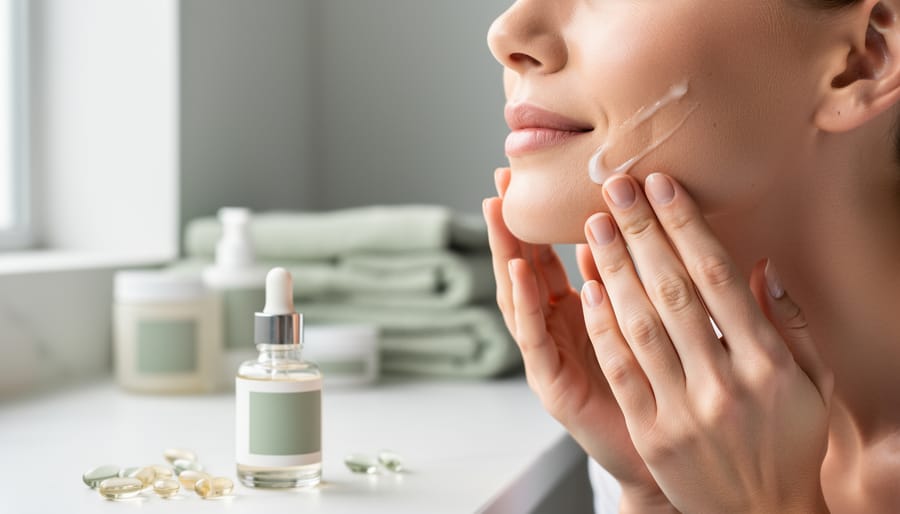
Fragrance-free skincare means products formulated without any perfume compounds, whether synthetic or natural, that could trigger irritation or allergic reactions. If you’ve ever experienced redness, itching, or breakouts after trying a new moisturizer, fragrance might be the hidden culprit. Since April 2026, Health Canada now requires brands to disclose specific fragrance allergens directly on cosmetic labels, making it easier than ever to identify what’s really inside your favorite serums and creams.
I learned this the hard way years ago when a luxurious face cream left my cheeks burning and blotchy. The ingredient list showed “parfum” near the bottom, which seemed harmless enough at the time. What I didn’t know then was that single word could represent any combination of hundreds of potential allergens. Dermatologists consistently rank fragrance among the top five causes of cosmetic contact dermatitis, affecting sensitive skin types and people with conditions like rosacea or eczema more severely.
The confusion doesn’t stop at “fragrance-free” versus “unscented.” Many products marketed as unscented still contain masking fragrances to neutralize the natural smell of active ingredients. True fragrance-free formulas skip these additions entirely. With new regulations requiring disclosure of over 80 fragrance allergens by August 2026, understanding labels becomes simpler, but knowing what to look for right now can transform your routine from aggravating to actually effective.
What Does Fragrance Free Really Mean?
I used to think “fragrance free” was pretty straightforward until I stood in the skincare aisle holding two products that both claimed to be fragrance-free, yet one smelled strongly of lavender and the other had absolutely no scent. Turns out, the skincare industry uses these terms more loosely than you might expect.
Fragrance free means a product contains no ingredients added specifically for scent. Clinically, the fragrance-free label is commonly interpreted to mean that a product is free of fragrance compounds that could trigger irritation or allergic reactions. However, here’s the confusing part: fragrance-free products can still have a smell from their active ingredients or preservatives. That slightly medicinal or chemical scent you notice? That’s just what the raw ingredients smell like.
Unscented is where things get tricky. These products often contain masking fragrances designed to hide the natural smell of ingredients. So while the final product doesn’t smell like much, it actually contains fragrance compounds that could still irritate sensitive skin. Not exactly what you want if you’re trying to avoid fragrances altogether.
Hypoallergenic sounds reassuring, but it’s essentially a marketing term with no legal definition in Canada. A product labeled hypoallergenic may still contain fragrances or other potential allergens. There’s no standardized testing or certification required to make this claim.
What should you actually look for? Starting April 12, 2026, new Health Canada regulations require cosmetic brands to disclose specific fragrance allergens directly on product labels when present above certain thresholds. This means you’ll finally see clear ingredient lists that help you identify potential irritants, making truly fragrance-free shopping significantly easier than the guesswork we’ve dealt with for years.
The Hidden Problem with Fragrances in Your Skcare
Here’s the thing about fragrances in skincare: they’re the pretty packaging on a product that might be quietly wreaking havoc on your skin. I learned this the hard way after months of wondering why my previously calm complexion had turned into a red, angry mess.
Brands add fragrances for one simple reason: they make products smell amazing and feel luxurious. That signature scent creates an experience, makes you want to use the product, and honestly, helps it fly off shelves. But here’s what they don’t advertise on those beautifully designed bottles: fragrance is one of the most common causes of contact dermatitis and allergic reactions in skincare.
When I finally connected my skin issues to the lavender-scented moisturizer I’d been using religiously, I felt foolish. How could something that smelled so natural and calming be the problem? But fragrance compounds, whether synthetic or derived from essential oils, can trigger irritation that doesn’t show up immediately. You might use a product for weeks or even months before your skin decides it’s had enough and starts reacting.
The real trouble is cumulative. Each fragrance-laden product you layer on adds to the burden on your skin barrier. That protective barrier is already dealing with environmental stressors, and fragrance compounds can compromise its function over time. This leads to increased sensitivity, making your skin more reactive to everything else in your routine.
What bothers me most is how hidden the problem can be. A product might not burn or sting right away, so you assume it’s fine. Meanwhile, subtle inflammation is building beneath the surface, leading to persistent redness, rough texture, or that annoying tightness that never quite goes away. With the new allergen disclosure requirements starting in April 2026, at least consumers will have better tools to identify potential irritants before they cause problems.
2026 Labeling Changes: What You Need to Know
Health Canada is rolling out some serious changes to cosmetic labeling, and if you care about what goes on your skin, these new rules are actually fantastic news. Starting April 12, 2026, cosmetic brands must disclose 24 specific fragrance allergens directly on product labels when they’re present above certain thresholds. Then on August 1, 2026, things get even more transparent: all new cosmetic products must list an expanded roster of over 80 fragrance allergens within the ingredient list.
What does this mean in practical terms? Before these regulations, a product could simply list “parfum” or “fragrance” on the label without revealing which specific compounds were hiding under that umbrella term. Now, if your moisturizer contains linalool, limonene, or any of the other designated allergens above the threshold levels, the brand must name them explicitly in the ingredient list. This is huge for anyone who’s experienced mysterious reactions and couldn’t pinpoint the culprit.
Shopping for fragrance-free products becomes dramatically simpler with these changes. Instead of playing detective with vague ingredient lists, you’ll see exactly which fragrance components are present. If you know you react to certain allergens, you can finally avoid them with confidence. And if a product claims to be fragrance-free, it’ll be easier than ever to verify that claim by checking for the absence of these listed compounds.
These regulations align Canada with European Union standards, which have required allergen disclosure for years. The phased approach gives brands time to reformulate or relabel, but the timeline means you’ll start seeing clearer labels on shelves right now. It’s a win for transparency and a genuine game-changer for informed skincare choices.
Who Should Use Fragrance Free Skincare?
If you’ve ever wondered whether fragrance-free skincare is really necessary, let me walk you through who truly benefits from making the switch.
People with sensitive skin are the most obvious candidates. If your face tingles, turns red, or feels tight after using certain products, fragrances could be the culprit. I learned this the hard way when I realized half my skincare stash was making my skin worse, not better.
Those dealing with eczema, rosacea, or dermatitis need to be particularly careful. Fragrances can trigger flare-ups that set back weeks of progress. One friend with rosacea told me that switching to fragrance-free products cut her breakouts in half within a month.
But here’s what surprised me: even if you don’t have diagnosed skin conditions, you might still benefit. Chronic irritation often shows up as general redness, rough texture, or that feeling that nothing quite works for your skin. Sometimes the solution isn’t a fancier product but a simpler one.
The minimalist skincare crowd embraces fragrance-free options because they align with the less-is-more philosophy. Why add unnecessary ingredients when your skin doesn’t need them?
People experiencing dehydration also find relief here. If you’re reaching for a dehydrated skin mask regularly, fragrance might be undermining your efforts by disrupting your moisture barrier.
Even if your skin seems fine now, fragrance sensitivity can develop over time with repeated exposure. Think of it as a preventive measure. Your future skin might thank you for being proactive today.
How to Identify Truly Fragrance Free Products
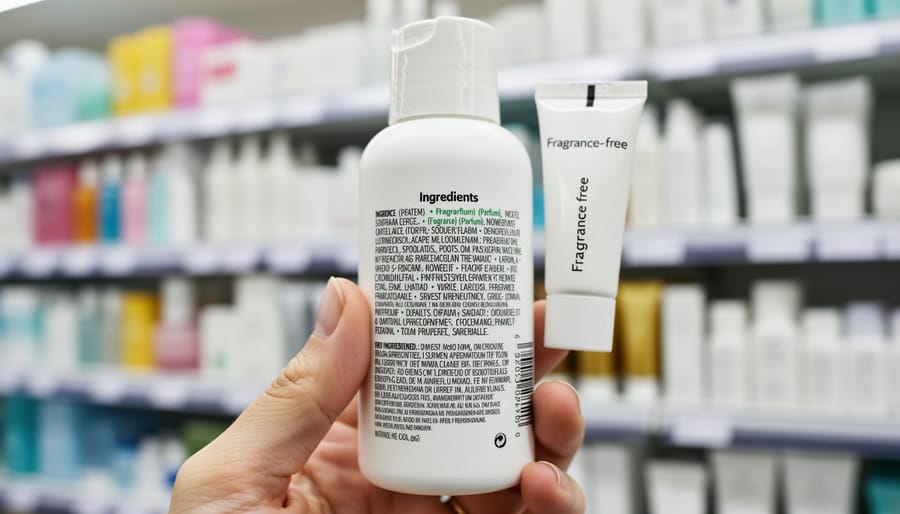
Walking down the skincare aisle, I used to grab products with “fragrance-free” on the label and assume I was safe. Then I learned that ingredient lists tell the real story, and suddenly those labels weren’t quite as straightforward as they seemed.
Reading an ingredient list properly takes practice, but once you know what to look for, it becomes second nature. The most obvious red flag is “parfum” or “fragrance” listed anywhere in the ingredients. These terms are umbrella labels that can represent dozens or even hundreds of individual compounds, many of which are common irritants.
Here’s where it gets trickier: products marketed as natural or botanical often rely heavily on essential oils for scent. Lavender oil, rose extract, citrus peel oil, and bergamot might sound gentle, but they’re still fragrances that can trigger reactions. Plant extracts added specifically for aroma rather than skincare benefits count as fragrances too.
To properly vet a product, follow this process:
- Check for the words “parfum,” “fragrance,” “aroma,” or “perfume” in the ingredient list and put the product back if you find them.
- Scan for essential oils like lavender, rose, citrus, eucalyptus, or peppermint oil, especially if they appear near the end of the list where scent additives typically hide.
- Look for botanical extracts that seem out of place for the product’s stated purpose, vanilla extract in a face wash, for instance, is probably there for smell.
- Read the new allergen disclosures required as of April 12, 2026, which list specific fragrance allergens like linalool, limonene, and geraniol when present above certain thresholds.
- Trust your nose as a final check: if a product smells noticeably pleasant or perfumed, it contains fragrance regardless of what the front label claims.
The 2026 labeling requirements are genuinely helpful here. When you see allergens like citronellol or eugenol listed, you know fragrance components are present even if they’re derived from natural sources. A truly fragrance-free product might have a slight natural scent from its active ingredients, but it won’t smell deliberately pleasant or floral.
I’ve found that fragrance-free products from dermatologist-recommended brands tend to be the most reliable. They understand that even trace amounts of scent compounds can cause problems for sensitive skin, so they formulate without them entirely.
Building Your Fragrance Free Skincare Routine
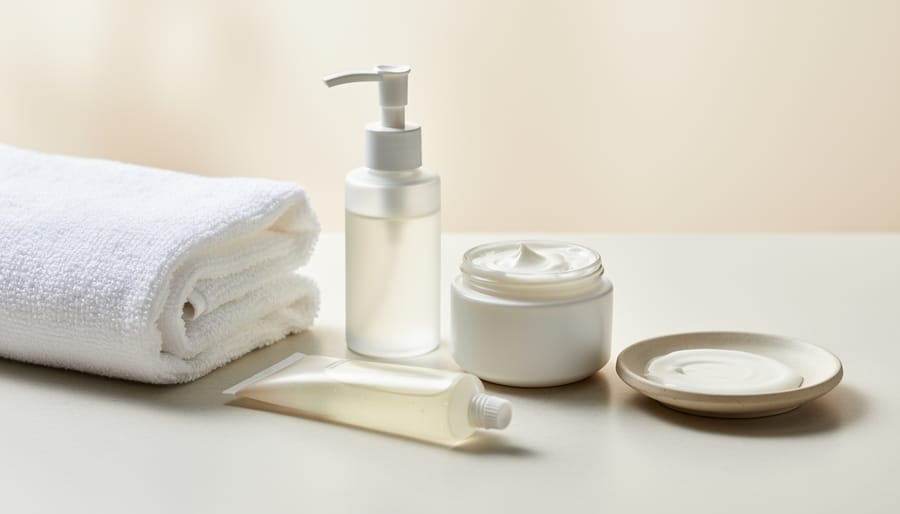
Making the switch to fragrance-free products doesn’t mean overhauling everything overnight. When I transitioned my own routine, I learned it’s smarter to start a routine gradually, replacing products one at a time so you can actually track what’s working.
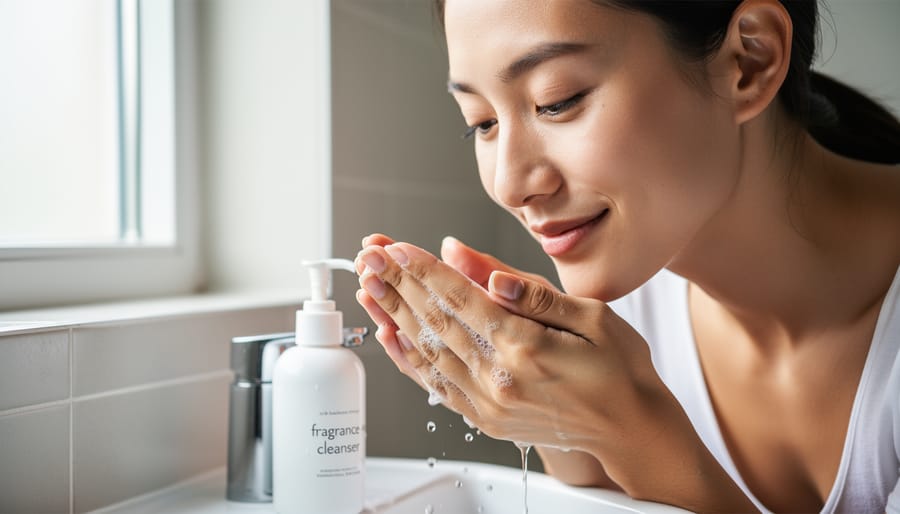
Begin with your cleanser and moisturizer. These stay on your skin longest and have the biggest impact on your barrier health. I swapped my foaming face wash first and noticed less tightness within days. Next came my daily moisturizer, which eliminated the faint redness I’d been blaming on weather. Serums can wait until later since they’re typically used in smaller amounts and contact your skin for shorter periods.
Your skin will tell you when things are improving. For me, the biggest sign was waking up without that tight, uncomfortable feeling. Within two weeks of switching to fragrance-free basics, my skin felt calmer and looked less blotchy. The persistent flaking around my nose cleared up, and I stopped needing to reapply moisturizer midday.
Keep notes during your first month. Track any changes in texture, tone, irritation levels, and how your skin feels throughout the day. This becomes especially helpful during seasonal transitions. When adjusting my winter skincare I noticed fragrance-free products didn’t sting on windburned cheeks the way my old favorites did.
Give each new product at least two weeks before adding another. This patience pays off because you’ll know exactly which product deserves credit for improvements or needs to be replaced. Some people see results within days, while others need a full skin cycle (about 28 days) to notice real change. Your skin’s timeline is unique, and rushing the process only creates confusion about what’s actually helping.
Common Myths About Fragrance Free Skincare
I’ll be honest: when I first switched to fragrance-free skincare, a friend wrinkled her nose and said, “But doesn’t that mean your products smell like… nothing? How boring.” I laughed, but her reaction reflects some widespread myths that deserve clearing up, especially now that the 2026 labeling changes are bringing fragrance-free products into sharper focus.
- Myth: Fragrance-free products are less effective
- Reality: Fragrance compounds serve zero skincare function beyond smell. The active ingredients doing the real work (retinol, hyaluronic acid, niacinamide) perform identically whether or not a product has added scent.
- Myth: Natural fragrances are always safer than synthetic ones
- Reality: Essential oils and botanical extracts can be just as irritating as synthetic fragrances, sometimes more so. Your skin doesn’t distinguish between “natural” and “synthetic” allergens.
- Myth: You need fragrance for a luxurious skincare experience
- Reality: Luxury comes from how a product feels, absorbs, and performs on your skin. Rich textures, elegant packaging, and visible results create indulgence, not synthetic roses.
- Myth: Fragrance-free means completely odorless
- Reality: Fragrance-free products can have a mild scent from their active ingredients. That faint smell from your vitamin C serum? That’s just the ingredient itself, not added perfume.
Here’s what surprised me most: after two weeks without fragranced products, I realized I didn’t miss the artificial scents at all. My cleanser still felt luxurious as it melted away makeup. My serum still glided on beautifully. The difference? My skin stopped throwing random tantrums.
The biggest misconception I encounter is that choosing fragrance-free means settling for boring, clinical products. In reality, you’re choosing efficacy over sensory marketing. You’re letting ingredients speak for themselves instead of masking them with perfume. And with the new allergen disclosure requirements rolling out in April and August 2026, identifying truly fragrance-free options has never been easier or more transparent.
Making the switch to fragrance-free skincare isn’t just about avoiding irritation, it’s about listening to what your skin has been trying to tell you all along. I’ve watched my own skin transform since cutting out fragrances, and I’ve heard countless similar stories from readers who finally found relief after years of frustration.
Your skin knows what it needs better than any marketing claim ever could. Pay attention to how it feels, how it looks, and how it responds to the products you use. If something stings, tingles, or leaves you red, that’s your skin asking for gentler care.
Thanks to the new labeling requirements rolling out through 2026, you’re now equipped with better information than ever before. Those allergen disclosures on ingredient lists? They’re your new best friend. You don’t need to be a cosmetic chemist to make smart choices anymore, the answers are right there on the label.
This journey is yours, and there’s no rush. Start where it makes sense for you, whether that’s swapping your cleanser or rebuilding your entire routine. Your skin will thank you for it.