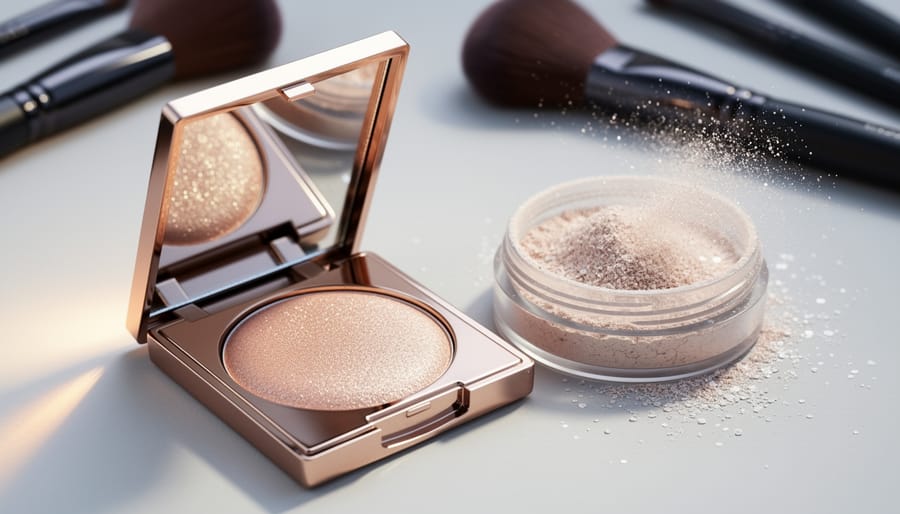
The mineral responsible for that coveted shimmer in your favorite highlighter, eyeshadow, and lipgloss is mica. This naturally occurring mineral has become the beauty industry’s go-to ingredient for adding luminosity and sparkle to cosmetics, transforming everything from subtle daytime glow to dramatic evening glamour.
I first learned about mica when I was standing in Sephora, squinting at an ingredient list trying to figure out why one highlighter gave me that soft-focus glow while another looked like straight-up glitter. Turns out, mica’s unique structure is what makes the difference. The mineral forms in thin, flexible sheets that reflect and refract light, creating that soft, luminous sheen we associate with high-quality shimmery makeup.
You’ll find mica in nearly every product promising radiance or glow. Makeup brands rely on it for eyeshadows, blushes, bronzers, highlighters, and even nail polish. Beyond traditional color cosmetics, mica powders have expanded into creative applications like coloring UV resin with shimmer and sparkle effects.
What makes mica particularly valuable is its versatility. Depending on how it’s processed and what other minerals are present, mica can produce effects ranging from a barely-there luminosity to intense metallic finishes. The particle size matters too: finely milled mica creates a subtle glow, while larger particles deliver more obvious sparkle.
Understanding mica helps you make smarter choices about the shimmery products you buy. Not all mica is created equal, and knowing what to look for can mean the difference between a flattering glow and a glittery mess.
What Exactly Is Mica?
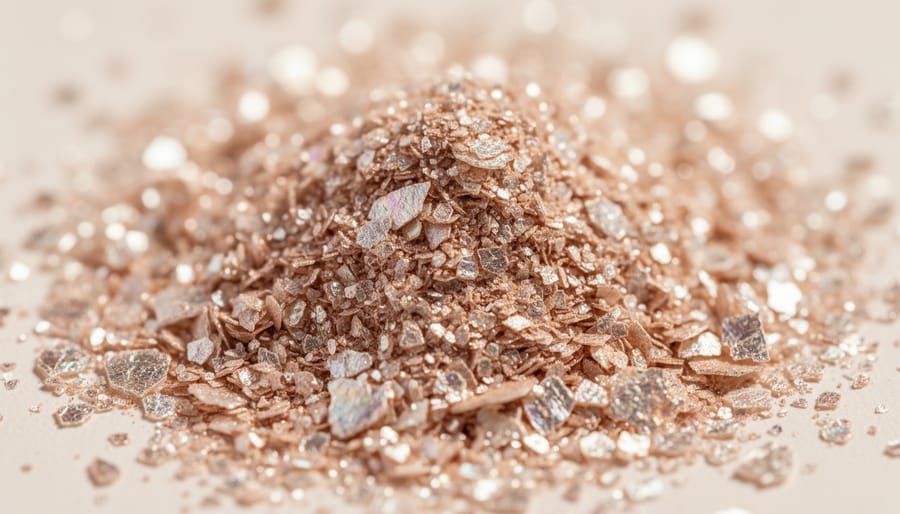
Mica is a group of naturally occurring silicate minerals that forms in thin, flat layers, picture a stack of delicate sheets you could almost peel apart. This layered structure is exactly what makes mica so special for beauty products. When light hits those microscopic layers, it bounces between them and reflects back to your eye, creating that soft, luminous glow that synthetic alternatives struggle to replicate. You’ll find mica in rocks worldwide, from ancient granite formations to metamorphic stone, where it’s been forming for millions of years.
What sets mica apart from other shimmer ingredients is its versatility. Depending on how it’s processed and combined with other minerals, mica can create everything from a barely-there lit-from-within glow to an intense metallic sparkle. The mineral itself is colorless or lightly tinted, but cosmetic manufacturers often coat mica particles with iron oxides or titanium dioxide to produce different shades and intensities. Its platelike particles scatter light in multiple directions rather than just reflecting it straight back, which gives that coveted dimensional shimmer instead of flat glitter.
The beauty industry gravitates toward mica because it’s been extensively studied, including multiple CIR safety assessments and it works beautifully in virtually any formula, from powder products to creamy highlighters. Unlike some synthetic alternatives that can look harsh or chunky on skin, mica creates a refined, natural-looking sheen that enhances rather than overwhelms your features.
How Mica Works Its Magic in Your Makeup
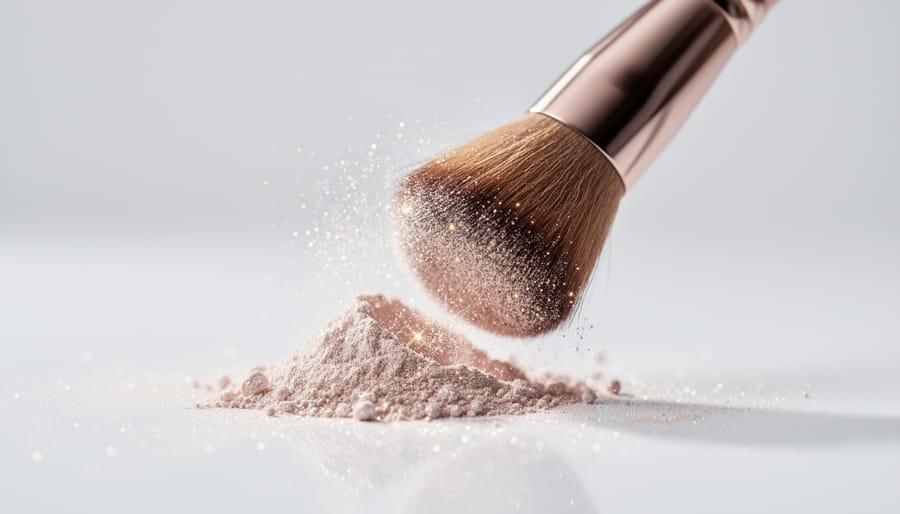
Ever caught your reflection in the mirror after applying highlighter and wondered why that glow looks so perfectly ethereal? The magic lies in mica’s unique structure. Unlike pigments that simply color your skin, mica particles are made up of thin, plate-like layers, imagine microscopic sheets of glass stacked on top of each other. When light hits these plates, it bounces off at multiple angles, creating that soft luminous sheen that can’t be replicated by flat, opaque colorants.
This light-scattering effect is what separates a subtle, sophisticated glow from harsh glitter. When you sweep a mica-infused highlighter across your cheekbones, those tiny plates sit on your skin’s surface and catch light from different directions throughout the day. Move your head, and the shimmer shifts with you, it’s living reflection rather than static sparkle.
The thinner and more uniform the mica particles, the finer the shimmer. That’s why some eyeshadows deliver an intense foil finish while others give just a whisper of radiance. In my own makeup bag, I’ve noticed this difference: my everyday illuminating primer contains finely-milled mica for a barely-there glow, while my evening highlighter has larger particles that catch studio lights beautifully. The same mineral, different particle sizes, completely different effects. That plate-like structure is doing all the heavy lifting, transforming ordinary makeup into something that genuinely glows from within.
Where You’ll Find Mica in Your Beauty Routine
Face Products That Rely on Mica
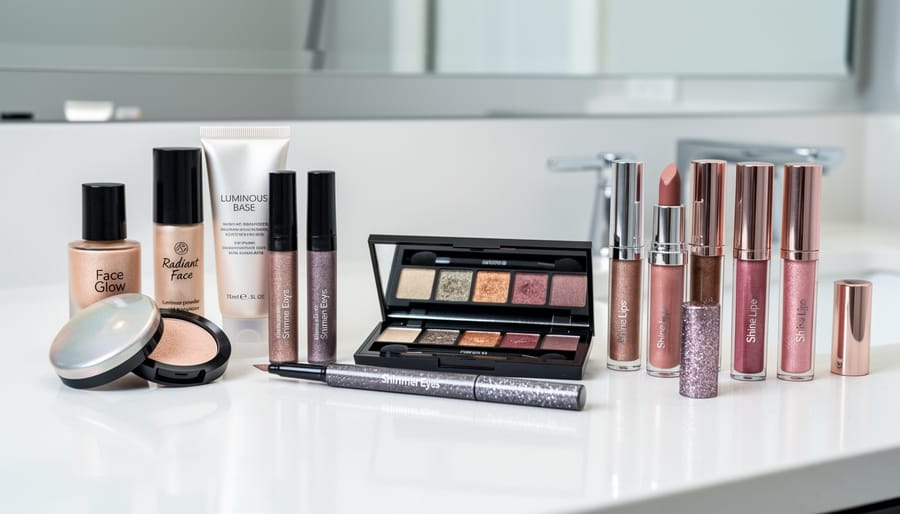
If you’ve ever reached for a highlighter to brighten your cheekbones or swipe on a glowing foundation before a night out, you’ve experienced mica’s magic firsthand. Face products are where this mineral truly shines, literally.
Highlighters are perhaps the most obvious mica showcase. That gleaming stripe across your cheekbone, temple, or bridge of your nose? Pure mica doing what it does best. Whether you prefer a powder compact or a cream formula, mica creates everything from a subtle lit-from-within glow to an intense, almost wet-looking sheen. I’ve found that powder highlighters tend to deliver more concentrated shimmer, while cream versions blend more seamlessly for everyday wear.
Illuminating primers have become my secret weapon for tired mornings. A good illuminating primer creates that radiant base before foundation even touches your skin, and mica particles are what make that possible. The mineral catches light throughout the day, giving you that “I actually slept eight hours” look.
Foundations with luminous or dewy finishes also rely on mica, though in smaller concentrations than dedicated highlighters. These formulas strike a balance, enough shimmer to fake healthy, glowing skin without looking glittery at your desk.
Eye Makeup and Mica Powders
Eyeshadows are where mica really steals the show. That gorgeous sparkle in your favorite palette? Pure mica magic. The mineral’s reflective plates catch light from every angle, transforming matte pigments into dimensional, eye-catching shades. From subtle champagne hues to bold metallic finishes, mica creates the depth and luminosity that makes shimmer makeup so captivating on the eyes.
Common eye products featuring mica include:
- Pressed eyeshadows with metallic or satin finishes that shift and catch light with movement
- Loose pigments and glitter formulations that deliver intense sparkle for dramatic looks
- Cream eyeshadows with built-in shimmer for easy one-and-done application
- Glitter liners and toppers that add concentrated sparkle to any eye look
Beyond traditional makeup, mica powders have become popular among creative makeup artists and crafters. These pure mineral powders offer concentrated color and shimmer for custom blending, and they extend beyond beauty into artistic applications like coloring UV resin with mica powders and glitter for jewelry and crafts. The versatility makes mica an essential ingredient whether you’re creating a soft daytime glow or a bold, glittery statement for your next night out.
Beyond Traditional Cosmetics
Mica doesn’t stop at your makeup bag. You’ll find it adding subtle shimmer to lip glosses and lipsticks, giving your pout that plumped-up luminous effect without feeling gritty. Nail polish brands rely on mica particles to create everything from delicate pearl finishes to full-on disco-ball sparkle, it’s what makes that champagne topcoat catch the light just right.
Body shimmer oils and lotions use mica to give skin an all-over glow, perfect for summer evenings or when you want your collarbones to look like they’ve been kissed by sunshine. I’ve even dusted a bit of loose mica powder along my arms before beach weddings, instant radiance.
The creative applications go beyond traditional beauty. Crafters and nail artists color UV resin with mica powders and glitter, creating custom jewelry, phone cases, and 3D nail art with that same light-reflecting magic. Mica powders have become a favorite in DIY cosmetics too, letting you customize your own lip balms or blushes with precisely the shimmer intensity you want. It’s the same mineral, just showing up in unexpected places.
Choosing Shimmer Products: What to Look For
The right shimmer product can make the difference between a radiant glow and looking like you fell face-first into a disco ball. Here’s how to find your perfect match.
Start by deciding on your desired finish. For everyday wear, look for products labeled “luminous,” “dewy,” or “satin”, these contain finer mica particles that give you that lit-from-within glow without obvious sparkle. If you’re after drama for evening looks, seek out “metallic,” “pearl,” or “intense shimmer” descriptors, which typically feature larger mica particles for more noticeable shine.
Skin tone plays a crucial role in how mica reflects light on your complexion. Cooler-toned mica (silvery, pink-pearl) tends to flatter fair to medium skin, while warmer, golden mica looks stunning on medium to deep complexions. Bronze and copper shimmers work beautifully across most skin tones. I’ve learned this through trial and error, that champagne highlighter that looked gorgeous in the compact made me look washed out until I switched to a peachy-gold version.
Check the ingredient list positioning: mica listed in the first five ingredients means you’re getting serious shimmer. Further down the list suggests a subtler effect, perfect for buildable glow.
Quality indicators matter. Premium mica-containing products feel silky, not gritty, and the shimmer should look seamless on skin rather than chunky or glittery. Swatch before buying when possible, the shimmer should blend smoothly and catch light beautifully without emphasizing texture.
For setting powders that add just a hint of radiance, look for “illuminating” or “radiant” versions that set your makeup while delivering that subtle mica glow. These work wonderfully for taking your look from office-appropriate to dinner-ready without needing to reapply.
Your Mica Questions Answered
I’m constantly asked about mica’s safety, especially by friends trying to decode their makeup ingredient lists. The good news? Mica itself is generally recognized as safe by regulatory bodies worldwide when used in cosmetics, and it’s been part of beauty formulations for decades without major safety concerns. Your skin is more likely to react to fragrances, preservatives, or other active ingredients in a product than to the mica itself.
Is mica safe for sensitive skin?
Mica is typically well-tolerated, even by sensitive skin types. However, if you experience irritation from shimmery products, it’s often due to other ingredients in the formula rather than the mica itself.
How do I identify mica on ingredient lists?
Look for “mica” listed directly on the label, it’s that straightforward. You might also see it listed as CI 77019, its color index number in some formulations.
Why do brands use mica instead of synthetic shimmer?
Natural mica creates a softer, more dimensional glow compared to synthetic alternatives like plastic glitter. It reflects light more subtly, giving that coveted lit-from-within effect rather than obvious sparkle.
Can mica cause breakouts?
Mica itself isn’t comedogenic and won’t clog pores. If you’re breaking out from shimmery products, check the base formula, oils, silicones, or thick emollients are the usual culprits.
One thing I’ve learned through trial and error: if a shimmery product irritates your skin, try switching brands rather than avoiding mica entirely. The particle size, processing method, and accompanying ingredients vary between manufacturers, and you might find one formulation works beautifully while another doesn’t. I had a highlighter once that made my cheeks itchy, turned out the issue was the synthetic fragrance, not the mica creating that gorgeous glow.