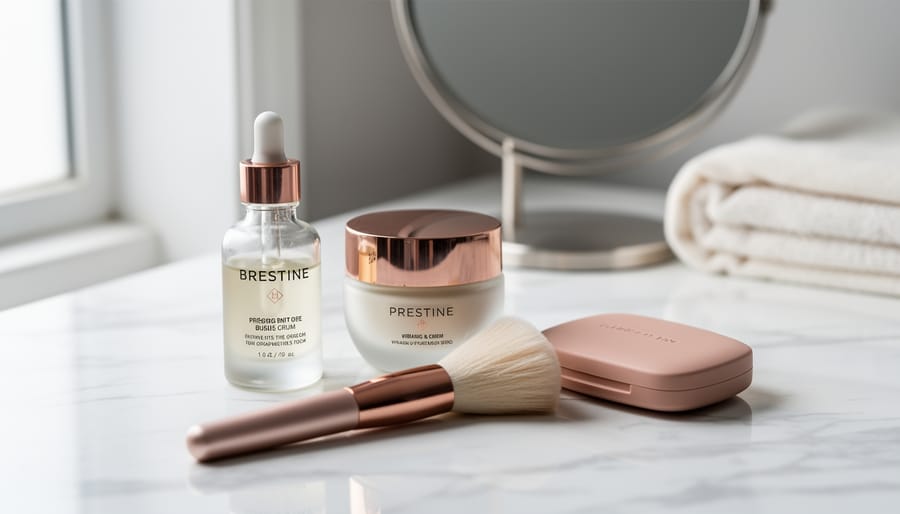
Prestige cosmetics are premium beauty products positioned at higher price points than drugstore alternatives, offering luxury formulations, sophisticated packaging, and often better performance. The category generated CAD 2.2 billion in sales during the first half of 2026 in Canada alone, with the market up 6% year over year, driven by consumers seeking products that blend efficacy with wellness benefits and yes, even accessible pricing within the premium tier.
I’ll be honest: the prestige label doesn’t automatically mean a product will transform your skin or outperform every budget option. What it does mean is access to cutting-edge ingredients, extensive research and development, elegant textures that make your routine feel special, and customer service that treats you like you matter. Some prestige products genuinely deliver results you can’t replicate at the drugstore. Others trade mostly on branding and beautiful counters.
The tricky part? Figuring out which premium purchases actually deserve a place in your routine and which are just expensive disappointments. With 83% of Canadians prioritizing self-care and 33% treating themselves with small indulgences to feel better, the prestige beauty market is tapping into something deeper than vanity. We’re investing in products that make us feel cared for, confident, and connected to a sense of luxury in our everyday lives.
Hair care is leading the charge, posting the strongest growth in Canada’s prestige market this year, with hair serum sales jumping an impressive 91% compared to the first half of 2025. That kind of momentum tells us consumers are willing to spend when they see real results and meaningful innovation.
What Actually Makes a Product ‘Prestige’
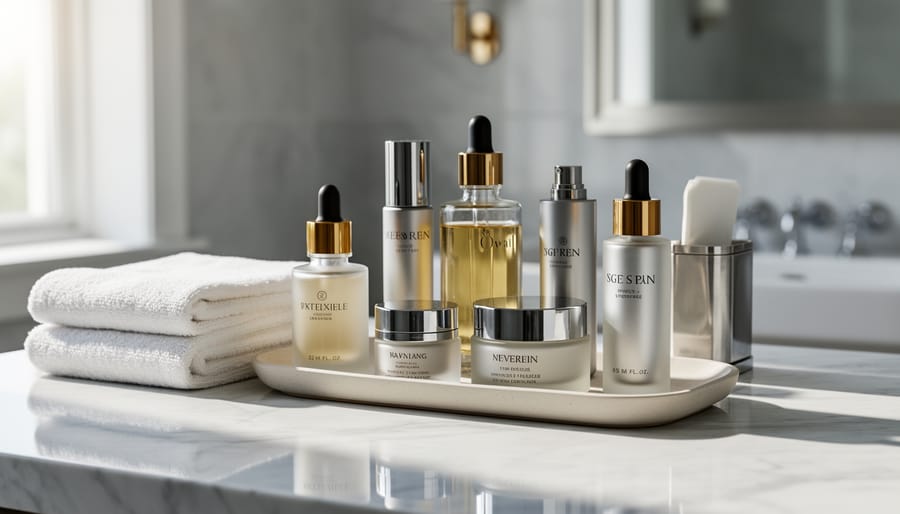
When I started exploring the prestige beauty space, I assumed it was all about the fancy packaging and designer labels. Turns out, there’s more to it than that, though not every premium product earns its price tag.
Prestige cosmetics aren’t defined by cost alone. The category centers on formulation sophistication, ingredient quality, and the investment brands make in research and development. These products typically feature higher concentrations of active ingredients, more stable formulations that maintain potency, and ingredient sourcing that prioritizes purity and efficacy. The research backing often includes clinical trials, dermatologist testing, and documented results beyond basic safety compliance.
- Formulation Complexity
- Advanced delivery systems, stabilized actives, and complementary ingredient combinations designed for maximum skin penetration and effectiveness.
- Ingredient Quality
- Pharmaceutical-grade actives, traceable sourcing, and higher concentrations of beneficial compounds compared to mass-market alternatives.
- Clinical Testing
- Independent studies, dermatologist trials, and documented efficacy data that go beyond standard safety requirements.
- Packaging Standards
- Airless pumps, UV-protective bottles, and sterile dispensing systems that preserve ingredient stability and extend product life.
- Retail Experience
- Expert consultation, personalized recommendations, and comprehensive ingredient education at point of purchase.
Mass-market products absolutely have their place, many use quality ingredients and deliver real results. The difference lies in the details. Prestige lines often invest years developing proprietary technologies, partner with research institutions, and reformulate based on clinical feedback. They’re selling not just a product but the science and testing behind it.
What legitimately justifies the premium, in my experience, is measurable performance difference. When a serum delivers visible results faster, stays stable for months without degrading, or uses a patented delivery system that actually works, that’s worth considering. When the only difference is the logo on the box, it’s not.
The Prestige Beauty Boom: What’s Driving the Growth
The prestige beauty market is having a serious moment, and the numbers back it up. Canada’s prestige beauty sector pulled in CAD 2.2 billion in sales during the first half of 2026 alone, marking a 6% jump from the same period last year. That’s not just growth, it’s evidence of a fundamental shift in how we think about beauty spending.
What’s fueling this boom? Self-care has moved from buzzword to lifestyle priority. A striking 83% of Canadians now consider self-care important, and 33% say they frequently treat themselves with small purchases to feel better. Prestige beauty products hit a sweet spot here: they’re accessible enough to justify as a regular treat, yet special enough to feel like genuine self-investment.
I’ve noticed this shift in my own shopping habits. Where I used to save prestige purchases for birthdays or special occasions, now I’m more likely to pick up a well-formulated serum or treatment as a midweek pick-me-up. It feels less frivolous when the product actually works.
The market’s responding to something deeper than vanity, though. Consumers increasingly favor products that combine efficacy with wellness benefits and accessible pricing. We want formulations that deliver results while making us feel good about the ritual itself. This isn’t about luxury for luxury’s sake, it’s about investing in products that genuinely improve how we look and feel.
Hair care exemplifies this trend perfectly. Hair sales surged 23% compared with the first half of 2025, with hair serums posting an astounding 91% increase. People are discovering that premium hair treatments can transform their daily routine into something that feels both therapeutic and effective. When a product delivers visible results while elevating your self-care game, the premium suddenly makes sense.
Where Prestige Products Actually Deliver
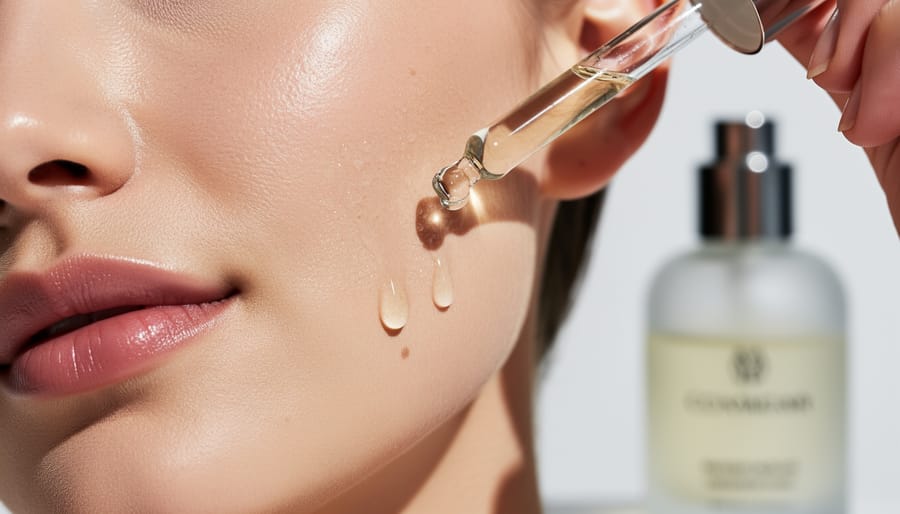
I’ve spent years comparing prestige and drugstore formulations, and honestly, the difference isn’t always worth the price jump. But there are specific categories where premium products consistently deliver results I can see and measure.
Skincare actives represent the clearest value gap. When you’re investing in retinol, vitamin C, or peptides, formulation quality matters enormously. Prestige brands typically use more stable forms of these ingredients, package them in airless containers that preserve potency, and engineer delivery systems that actually penetrate skin barriers. I switched to a prestige vitamin C serum two years ago after frustration with oxidized drugstore versions, and the difference in brightness and evenness was visible within three weeks. The ingredient does nothing if it degrades in the bottle before you finish it.
Hair care is where I’ve seen the most dramatic shift lately, which tracks with Canada’s 23% growth in prestige hair sales and that staggering 91% surge in hair serum purchases. These aren’t arbitrary numbers. Consumers are discovering what I learned after heat-styling damage: premium hair treatments use ingredients that actually repair and protect, not just coat strands temporarily. My heat protectant investment changed my hair texture completely, reducing breakage in a way cheaper options never managed.
Categories where prestige formulations typically outperform:
- Advanced serums with clinical-strength actives and proven penetration technology
- Targeted treatments for specific concerns like hyperpigmentation or rosacea
- Hair repair products with bond-building technology or molecular reconstruction
- Clinical-grade exfoliants that balance efficacy with skin barrier protection
The pattern I’ve noticed is simple: when the science behind the product is complex, when ingredient stability is critical, or when you need genuine repair rather than temporary cosmetic improvement, prestige formulations earn their keep. My skin showed minimal change with basic moisturizers at any price point, but treatments requiring sophisticated chemistry delivered measurable improvements only at the premium level.
Targeted treatments fall into the same camp. If you’re addressing melasma, persistent acne, or early aging signs, the concentration, purity, and delivery mechanism of active ingredients make prestige options genuinely superior. I wasted months on less expensive alternatives before accepting this reality.
When Mass Market Works Just as Well
Let’s be honest: sometimes the drugstore version is just as good, and no amount of luxe packaging changes that.
Basic cleansers are my favourite example. A gentle, pH-balanced cleanser from the mass market does exactly what a prestige one does, it removes makeup, dirt, and sunscreen without stripping your skin. The formulation principles are identical. I’ve used both, and my skin genuinely can’t tell the difference. If you’re not dealing with specific concerns that require active ingredients in your cleanser, save your money here.
Certain makeup categories fall into the same boat. Setting powders, for instance, often contain nearly identical formulations whether you buy them at the drugstore or the department store counter. The same goes for many basic eyeshadow primers and mascara formulas. I’ve worn mascaras across the price spectrum, and I’ve found that lash results come down to the brush design and personal preference more than the actual formula cost.
Moisturizers without actives are another area where mass market shines. If you’re looking for straightforward hydration with ceramides, hyaluronic acid, or niacinamide, plenty of accessible brands deliver these ingredients at effective percentages. The difference often comes down to texture preference and fragrance rather than performance.
This isn’t about prestige products being bad. It’s about recognizing that some categories have reached formulation parity across price points. When the science is straightforward and widely available, you’re often paying for branding and experience rather than superior results. I’ve learned to channel my budget toward the categories where premium formulations actually make a difference, and that means being strategic about where I don’t splurge.
How to Decide What’s Worth the Splurge
I’ve learned to approach prestige purchases like a detective rather than a browser. After years of impulse buys and regret, I developed a framework that saves both money and disappointment.
- Check the active ingredient concentration first. A 0.5% retinol serum isn’t worth premium pricing regardless of the brand name on the bottle. Compare what concentration you’re actually getting, sometimes mass-market brands use identical percentages.
- Look for clinical backing or peer-reviewed research. Brands that invest in actual studies usually publish them. If you can’t find evidence beyond marketing claims, that’s a red flag.
- Match the product to your specific skin concern. The fanciest moisturizer means nothing if your real issue is hyperpigmentation. I wasted money on gorgeous creams that didn’t address what my skin actually needed.
- Consider the formula stability. Some ingredients like vitamin C oxidize quickly in poor packaging. If you’re paying premium prices, you deserve airless pumps and opaque bottles that preserve efficacy.
- Calculate cost per use. A serum you’ll use twice daily for three months has very different value than a mask you’ll apply weekly. Break it down to what you’re actually spending per application.
My biggest mistake? Buying prestige products before I knew how to start a routine properly. I’d splurge on advanced treatments without understanding where they fit or what results to expect. Now I identify my top three skin priorities, then decide where premium formulations genuinely move the needle on those specific concerns.
I also learned to ignore packaging appeal. That heavy glass jar and silk-lined box cost money that didn’t go into the formula. If beautiful packaging matters to your self-care ritual, factor that in honestly, but don’t confuse it with superior ingredients.
My Personal Prestige-to-Drugstore Ratio

I’ve learned to build my routine around a 70-30 split: roughly 70% prestige where it matters, 30% drugstore where it doesn’t. This ratio keeps my skin happy without requiring me to skip other things I enjoy.
My treatment products are almost exclusively prestige. My vitamin C serum, retinol, and peptide eye cream are investments I make without hesitation. These formulations use stabilized actives at effective concentrations, and I’ve watched them deliver visible changes over months of consistent use. The difference between a budget vitamin C and a well-formulated prestige one isn’t subtle, one oxidizes quickly and irritates my skin, while the other stays potent and absorbs beautifully.
Hair care has become another prestige priority for me recently. After noticing how transformative a quality hair serum was for my post-bleach damage, I understood why this category is seeing such explosive growth. The difference in texture, shine, and manageability convinced me that professional-grade hair products deserve a place in my budget.
Where I happily save: cleansers, micellar water, and most makeup removers. A gentle, effective cleanser doesn’t need luxury packaging or exotic extracts. I’ve used affordable cleansers that work identically to their prestige counterparts. Same with basic hydrating toners and setting sprays, the formulations are straightforward enough that price doesn’t correlate with performance.
For makeup, I mix freely. Foundation and concealer are prestige for me because they sit on my skin all day and I need them to wear well. But mascaras, brow products, and setting powders? I’ve never found premium versions that outperform well-reviewed accessible options.
This approach reflects what many of us want now: effective products that contribute to our wellbeing without financial stress. Self-care shouldn’t mean choosing between results and rent.
Here’s the bottom line: prestige cosmetics absolutely earn their place in your routine when they deliver targeted results you can see and feel. A sophisticated retinol serum or a clinically-backed treatment can transform your skin in ways basic formulations simply can’t match. But the smartest approach? Build a strategic mix of premium investments and accessible staples.
I’ve learned that self-care doesn’t require emptying your wallet. Focus on where prestige formulations genuinely outperform, active serums, specialized treatments, unstable ingredients that benefit from advanced delivery systems. Then confidently fill the gaps with effective mass-market options for basics like cleansers or straightforward products.
Your skin concerns, goals, and what actually works for you matter infinitely more than any price tag. With Canada’s prestige beauty market showing consumers increasingly seek efficacy combined with accessible pricing, you’re in good company building a thoughtful routine that prioritizes results over labels. The 83% of Canadians who value self-care understand this truth: taking care of yourself is about consistency and choosing products that genuinely serve your needs, not about spending the most money possible.