I first heard about Pavise when a dermatologist friend mentioned their sunscreen during a conversation about UV protection at a coffee shop in 2025. She was intrigued by their approach, but cautious about the marketing language. That’s exactly where you might be right now: you’ve seen Pavise’s sleek packaging and heard about their diamond-based technology, but you’re wondering whether this premium skincare line genuinely delivers on its promises or if it’s another overhyped luxury brand.
Pavise positions itself as a scientifically advanced skincare company that combines mineral sun protection with what they call “Dynamic Aging Defense.” Their signature ingredient is a synthetic diamond complex that they claim helps protect skin from environmental damage. The brand makes ambitious statements about cellular protection and DNA defense, though it’s important to recognize these as marketing claims rather than medical treatments. No cosmetic product can reverse cellular aging or repair DNA damage the way pharmaceutical interventions might, and dermatologists emphasize that such language requires careful interpretation.
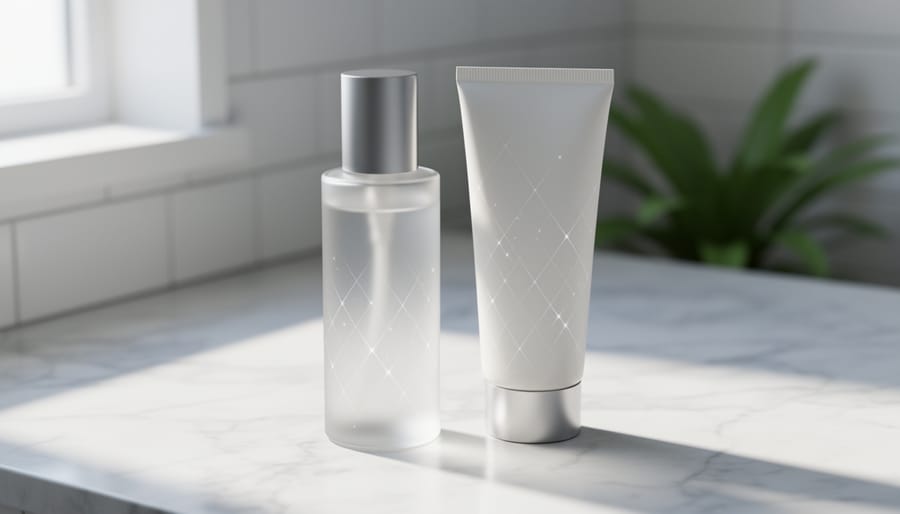
What sets Pavise apart in the crowded sunscreen market is their focus on elegant mineral formulations that don’t leave the chalky white cast many zinc oxide products do. Their products typically range from $45 to $75, placing them firmly in the premium category alongside brands like Supergoop and La Roche-Posay. But does the science justify the price tag?
After testing their core products and consulting with cosmetic chemists, I’ve found that Pavise occupies an interesting middle ground. Their formulations are sophisticated and genuinely well-crafted, but understanding what you’re actually getting for your money requires looking past the marketing terminology and examining the ingredients, performance, and realistic benefits.
What Makes Pavise Different: The DiamondCore® Shield Technology
If you’ve spotted Pavise on your Instagram feed or at Sephora, you’ve probably heard about their signature DiamondCore® Shield Technology. It sounds like something out of a luxury spa brochure, but what does it actually mean?
At its core, DiamondCore® Shield is Pavise’s patented approach to zinc oxide, the mineral UV filter that’s been protecting skin for decades. The brand augments standard zinc oxide particles with diamond dust. That’s right, actual diamonds, though in microscopic form. The idea is that these diamond particles scatter and reflect UV light more effectively than zinc oxide alone, potentially offering enhanced sun protection while requiring less active ingredient.
Here’s where we need to be realistic. Zinc oxide already reflects and scatters UV radiation effectively, which is why dermatologists have recommended it for years. Pavise’s technology adds a layer of sophistication to this proven approach, but it’s important to understand that “diamond-augmented” doesn’t mean miracle-working. The FDA regulates sunscreen as an over-the-counter drug, and any product sold in the U.S. must meet the same basic efficacy standards regardless of whether it contains diamonds or not.
What this technology might offer is improved cosmetic elegance. Traditional zinc oxide sunscreens can feel thick, leave a white cast, and sit heavily on the skin. By modifying how the particles behave, Pavise claims their formulations feel lighter and blend more seamlessly. That’s a legitimate advantage if it makes you more likely to wear sunscreen daily, which is the real goal.
The DiamondCore® Shield appears in Pavise’s flagship product, Dynamic Age Defense, their daily SPF moisturizer. Whether the diamond augmentation justifies the premium price over excellent standard mineral sunscreens is something we’ll dig into as we examine the actual performance of these products.

The Pavise Product Line: What’s Actually Available in 2026
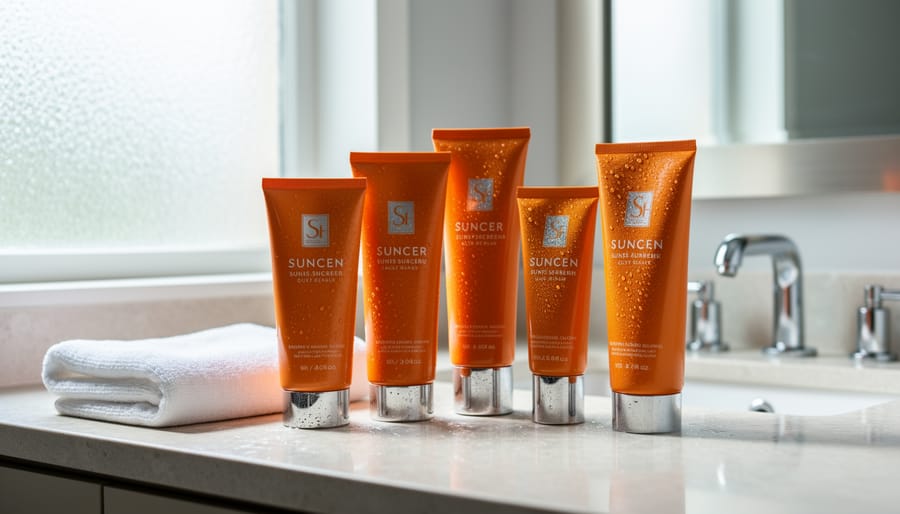
Pavise keeps its product lineup refreshingly simple. As of 2026, they offer four core products plus refill options, which makes navigating their range straightforward compared to brands that overwhelm you with dozens of SKUs.
Let me break down what’s actually on the shelves:
| Product | Primary Function | Size | Price Point |
|---|---|---|---|
| Dynamic Age Defense | Daily mineral sunscreen with DiamondCore® technology | 1.7 fl oz | Premium |
| Bioadaptive Stress Repair | Antioxidant serum for daily protection | 1 fl oz | Premium |
| Precision Eye Lift | Eye treatment with mineral SPF | 0.5 fl oz | $128 |
| Gentle Amino Powerwash | Powder-to-foam cleanser | 1.5 oz | Mid-range |
The Dynamic Age Defense is their hero product and what most people try first. It’s a mineral sunscreen built around their patented DiamondCore Shield Technology, positioning it as both sun protection and a treatment product. The brand markets it with language around supporting skin’s natural defenses, though it’s important to remember these are marketing terms rather than medical promises.
Bioadaptive Stress Repair serves as their antioxidant complement to the sunscreen. It’s designed to layer underneath Dynamic Age Defense, creating what Pavise calls a “full-spectrum defense system” against environmental stressors. The product name suggests biological adaptability, but like most cosmetic serums, its effects are supportive rather than transformative.
Precision Eye Lift is their most expensive offering at $128 for half an ounce. This eye treatment incorporates mineral SPF protection along with ingredients targeting the delicate eye area. That price point puts it firmly in luxury territory, competing with prestige dermatological brands rather than mass-market options.
The Gentle Amino Powerwash rounds out the collection as their only cleanser. The powder format activates with water to create a gentle foam, which some users prefer for travel or controlling product dispensing.
What’s notable is what Pavise doesn’t offer. There’s no moisturizer, no toner, no exfoliant, no mask. They’ve clearly chosen to focus on specific steps rather than building a complete routine from scratch. You’ll need to integrate Pavise products with items from other brands, which may appeal to skincare enthusiasts who like mixing and matching but might frustrate those seeking a complete system from one source.
The brand also offers refills for both Dynamic Age Defense and Bioadaptive Stress Repair, which somewhat softens the premium pricing if you’re committed to the products long-term. They even sell a UV camera to help visualize sun damage, though that’s more of a novelty educational tool than a necessity for most users.
Ingredient Analysis: Beyond the ‘Clean Beauty’ Buzzword
What ‘Clean’ Actually Means (And Doesn’t Mean)
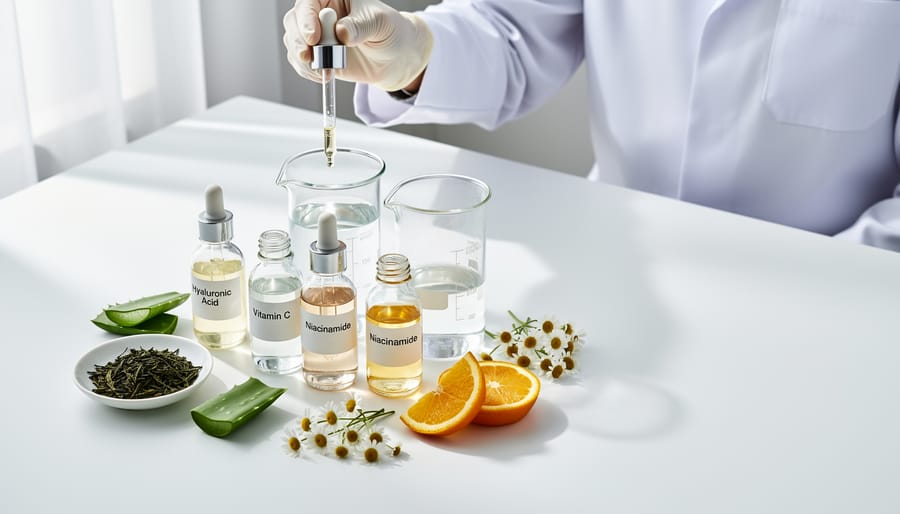
Here’s the thing about “clean beauty”: it sounds reassuring, but it doesn’t actually mean anything official. The term emerged in the 1990s as consumers grew warier of ingredient safety, and since then it’s become a marketing catchall with no regulatory definition. You’ll see it slapped on products that meet wildly different standards, or sometimes no standards at all beyond a brand’s internal policy.
Pavise meets both Sephora Clean and Credo certification requirements, which is worth noting. Sephora Clean excludes a list of specific ingredients like parabens, formaldehyde donors, and phthalates. Credo takes a stricter approach with a longer exclusion list and additional sustainability criteria. These certifications provide some baseline reassurance, but they’re still retailer-defined standards, not government regulation.
The bigger issue? Exclusion lists don’t tell you what a product does contain or how well it works. A formula can avoid every “bad” ingredient and still irritate your skin, provide inadequate sun protection, or just feel terrible to use. Pavise acknowledges this limitation, which is why they emphasize their three-tier testing approach: evaluating ingredient safety, checking concentration safety, and testing the finished product. That’s a more meaningful framework than simply meeting a clean beauty checklist.
My take: use clean certifications as one data point, not the deciding factor. The ingredient list, testing protocols, and your own skin’s response matter far more than any marketing label.
Key Ingredients to Know
Pavise’s ingredient lists feature several actives worth understanding beyond the diamond-augmented zinc oxide. Their flagship DiamondCore® Shield Technology pairs 10% zinc oxide with micro-diamond particles, which the brand positions as enhancing UV protection and skin luminosity. While zinc oxide’s sun-protective properties are well-established, the specific benefits of diamond augmentation remain less studied in independent research.
Across their products, you’ll find niacinamide, a form of vitamin B3 with research support for addressing uneven tone and strengthening the skin barrier. The line also includes various peptides, which are amino acid chains that brands often associate with supporting skin structure, though individual peptide performance varies significantly by type and concentration.
Their eye treatment features ergothioneine, an antioxidant amino acid, alongside caffeine and traditional moisturizing ingredients. The Bioadaptive Stress Repair product contains squalane and bisabolol, both recognized for their soothing properties.
What you won’t find are parabens, sulfates, or synthetic fragrances, aligning with their adherence to Sephora Clean and Credo standards. However, it’s worth remembering that meeting these retailer standards doesn’t guarantee superior performance, just that formulations avoid certain restricted ingredients.
The concentrations of these actives aren’t fully disclosed on packaging, which makes it difficult to assess potency compared to alternatives. When evaluating any skincare line, ingredient presence matters less than concentration, formulation stability, and how your individual skin responds.
Performance Review: My Experience with Pavise Products
Dynamic Age Defense: The Flagship Sunscreen
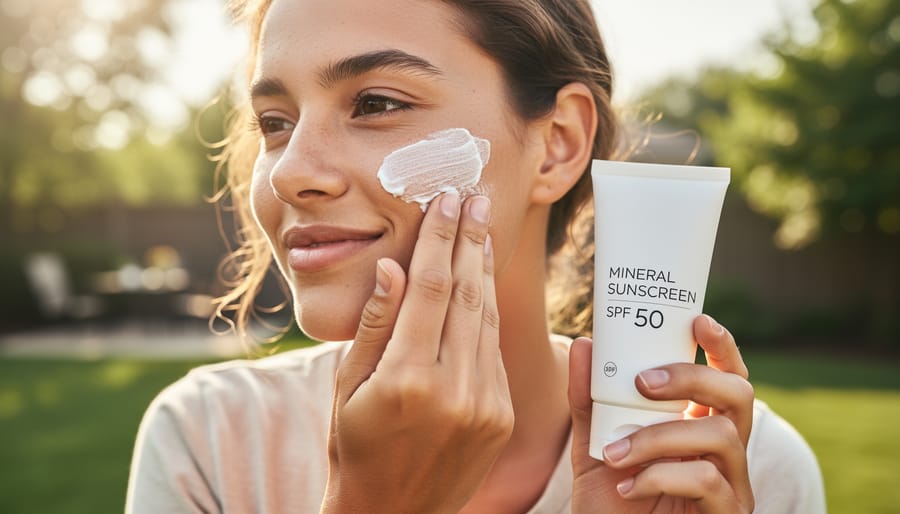
I tested Dynamic Age Defense for three weeks as my primary daytime SPF, and the texture is where this sunscreen immediately sets itself apart. It’s a lightweight cream that applies more like a serum than a traditional mineral formula. No thick paste, no tugging. It spreads easily and absorbs within 20 seconds, leaving a satin finish that works well under makeup.
The white cast is minimal but not absent. On my fair-medium skin tone, I noticed a slight brightening effect that settled after a few minutes. Deeper skin tones may experience more noticeable cast initially, though it does fade somewhat with blending. This is typical for zinc oxide formulas, even those with diamond technology.
Longevity impressed me. The product held up through a full workday without breaking down or feeling greasy by midafternoon. I did reapply after eating lunch, as you should with any sunscreen.
Layering worked surprisingly well. It sits nicely over my vitamin C serum and under foundation without pilling, which is rare for mineral SPFs. That said, if you use a thick moisturizer underneath, you might experience some texture issues.
Now, about those marketing terms like “age defense.” While the sunscreen provides solid UV protection (which legitimately helps prevent photoaging), the product name itself is marketing language rather than a medical promise. Zinc oxide blocks UV rays effectively, which is preventative, not corrective. Any talk of reversing existing damage should be met with skepticism. What this does well is protect your skin moving forward.
Precision Eye Lift: Premium Price, Premium Results?
Let’s be honest: $128 for a 0.5 fl. oz. eye treatment is a serious investment. That’s roughly $8.50 per application if you use it twice daily for a month, putting Precision Eye Lift in direct competition with luxury brands like La Mer and Augustinus Bader.
The texture surprised me. Instead of the thick, occlusive formula I expected at this price point, it’s a lightweight serum-cream that absorbs quickly without pilling under makeup. The packaging includes a cooling metal applicator that feels nice but isn’t revolutionary.
Here’s where I’ll be blunt: while the formula contains some genuinely interesting ingredients, terms like “precision eye lift” are marketing language, not medical promises. Eye creams can’t lift skin in any structural sense. They can temporarily plump, hydrate, reduce puffiness, and potentially improve texture over time with consistent use, but expecting dramatic lifting or transformation sets unrealistic expectations.
Compared to effective alternatives like CeraVe Eye Repair Cream at $16 or even mid-tier options around $50, you’re paying a significant premium for Pavise’s formulation approach and brand positioning. Whether that’s justified depends entirely on your budget and how much you value the specific ingredient profile and sensorial experience Pavise offers.
The Supporting Cast: Cleanser and Repair Products
I tested the Gentle Amino Powerwash expecting typical foaming cleanser performance, and it delivered exactly that, nothing groundbreaking, nothing disappointing. The amino acid-based formula feels gentle and doesn’t strip my skin, which matters when you’re using active ingredients elsewhere in your routine. It rinses clean without residue, though at this price point, plenty of gentler cleansers perform similarly.
The Bioadaptive Stress Repair is trickier to evaluate. While the brand uses language like “stress repair” in their marketing, these terms describe the product’s intended purpose rather than proven medical effects. The cream itself has a rich texture that works well as a nighttime moisturizer, but whether it delivers on the “repair” element beyond basic hydration is difficult to measure objectively. My skin felt comfortable using it, though I’d hesitate to attribute specific improvements to this product alone given the other treatments in my routine.
Understanding the Marketing Claims: What Science Supports (and What Doesn’t)
Let’s talk about what Pavise’s product names and marketing actually promise, because there’s a big gap between what sounds impressive and what any skincare product can realistically deliver.
Terms like “Dynamic Age Defense” and “Bioadaptive Stress Repair” sound scientific, but they’re marketing language, not medical descriptions. No cosmetic product can reverse cellular aging or repair DNA damage in the way those phrases might suggest. The FDA regulates what counts as a drug versus a cosmetic precisely because of these distinctions. If a product could truly reverse aging at the cellular level, it would need to go through pharmaceutical trials and approval. Pavise’s products don’t, which means they’re cosmetics with protective and cosmetic benefits, not medical treatments.
That said, some of the individual ingredients Pavise uses do have legitimate research behind them. Zinc oxide provides proven broad-spectrum UV protection, which is the single most effective anti-aging intervention available in skincare. Certain antioxidants and peptides have studies showing they can improve skin appearance and potentially offer some protective benefits against environmental stressors. The DiamondCore® Shield Technology uses diamond-augmented zinc oxide, which Pavise claims enhances UV protection, though I haven’t seen independent third-party studies confirming superiority over standard mineral formulations.
Here’s what matters more than the product names: consistency matters far more than any single ingredient. Using a sunscreen daily (any effective sunscreen, not necessarily Pavise) will do more for your skin than the fanciest peptide serum you use occasionally. The real anti-aging work happens through prevention, not reversal.
When you see claims about “cellular repair” or “stress defense,” read them as shorthand for “this contains ingredients that may support skin health” rather than literal medical promises. Your skin has natural repair processes; good skincare can support those processes by protecting against further damage and providing beneficial ingredients. But it can’t undo years of sun damage or turn back your biological clock.
Pavise isn’t unique in using aspirational language. Most premium skincare brands do. The difference is whether the underlying formulation is solid, which gets back to ingredient quality and UV protection effectiveness. On those practical measures, Pavise does deliver a well-formulated mineral sunscreen with additional beneficial ingredients. Just don’t expect miracles beyond good sun protection and pleasant texture.
Value Comparison: How Pavise Stacks Up Against Alternatives
Let’s talk money, because Pavise sits firmly in the luxury category. The Dynamic Age Defense retails for around $68 for 50ml, while the Precision Eye Lift commands that $128 price tag for just 15ml. These aren’t drugstore prices by any stretch.
To put this in perspective, here’s how Pavise compares to other premium mineral sunscreens:
| Brand | Price | Size | Key Differentiator |
|---|---|---|---|
| Pavise Dynamic Age Defense | $68 | 50ml | DiamondCore® Shield Technology |
| Elta MD UV Physical | $38 | 85g | Dermatologist-recommended |
| Supergoop! Zincscreen | $42 | 50ml | Blue light protection claims |
| La Roche-Posay Anthelios Mineral | $36 | 50ml | Thermal spring water |
The cost-per-milliliter math doesn’t favor Pavise. You’re paying roughly $1.36 per milliliter versus 45 cents for Elta MD or 84 cents for Supergoop. That premium hinges entirely on whether you value the diamond-augmented zinc oxide technology, which remains a unique formulation approach rather than a clinically-proven game-changer.
The refill program does help. Refills cost $58, saving you $10 per purchase and reducing packaging waste. If you commit to the brand long-term, that’s about $40 saved annually for daily users. Still, you’re spending more than twice what you’d pay for dermatologist-recommended alternatives.
I’ve found that Pavise makes sense if cosmetic elegance matters enough to justify the premium. The texture really is superior to most mineral formulas, which matters if you’ve abandoned mineral sunscreens in the past due to chalkiness. For budget-conscious shoppers building a winter skincare routine or those who prioritize affordability over aesthetics, drugstore mineral options deliver the same UV protection for a fraction of the cost. Unlike specialized products such as heat protectants where formulation differences significantly impact performance, sunscreen efficacy primarily depends on consistent application rather than premium ingredients. If you’re drawn to accessible luxury pricing, checking out our Muji skincare review might offer budget-friendly alternatives.
Who Should Consider Pavise (And Who Should Look Elsewhere)
Pavise makes the most sense if you value premium formulations, can’t tolerate chemical sunscreens, and prioritize cosmetic elegance over budget. The mineral-only approach works beautifully for sensitive skin that reacts to avobenzone or oxybenzone, and the texture genuinely sets it apart from chalkier zinc oxide options. If you’ve struggled to find a daily mineral sunscreen that doesn’t pill under makeup or leave a visible cast, Pavise solves that problem.
The brand is also worth considering if you’re looking for streamlined routines. The Dynamic Age Defense combines broad-spectrum protection with hydrating ingredients, eliminating the need for a separate moisturizer for many users. People who value clean ingredient standards without obsessing over marketing buzzwords will appreciate Pavise’s transparency about their testing approach.
However, look elsewhere if budget is your primary concern. You can find effective mineral sunscreens at a fraction of the cost, though you’ll sacrifice some of the luxurious texture. Those with acne-prone skin might find Pavise too rich, especially the Dynamic Age Defense, simpler formulations often work better for congestion-prone complexions.
If you’re curious about exploring other premium options with different ingredient philosophies, K-beauty skincare brands offer innovative formulations at various price points. And if you’re skeptical of marketing language around cellular repair or age defense, you’re right to be cautious. While Pavise uses quality ingredients, those terms are promotional language, not medical guarantees.
The refill program helps justify the initial investment if you commit to repurchasing. For the rest, decide based on whether the texture upgrade matters enough to warrant the premium.
After testing multiple Pavise products and analyzing their formulations, I can say the brand delivers on some promises while others remain squarely in marketing territory. The DiamondCore® Shield Technology does create an impressively cosmetically elegant mineral sunscreen that wears well under makeup and doesn’t leave the ghostly white cast typical of zinc oxide formulas. That’s a genuine achievement worth acknowledging.
However, the loftier claims around age reversal and cellular repair lack the robust clinical evidence that would justify such confident language. These are aspirational marketing terms, not medical guarantees. While the ingredients themselves have research support in various contexts, expecting dramatic anti-aging results from any topical product requires realistic expectations and patience that extends well beyond a single purchase.
Should you invest in Pavise? If you’ve struggled to find a mineral sunscreen you’ll actually wear daily, and premium pricing fits your budget, the Dynamic Age Defense is worth trying. The refill program helps offset the initial cost over time. But if you’re price-sensitive or skeptical about luxury skincare, equally effective mineral sunscreens exist at lower price points, even if they don’t feel quite as elegant.
Here’s what matters most: you’re wearing daily broad-spectrum SPF protection consistently. Whether that’s Pavise or a drugstore alternative matters far less than the habit itself. The best sunscreen is always the one you’ll actually use every single day.