
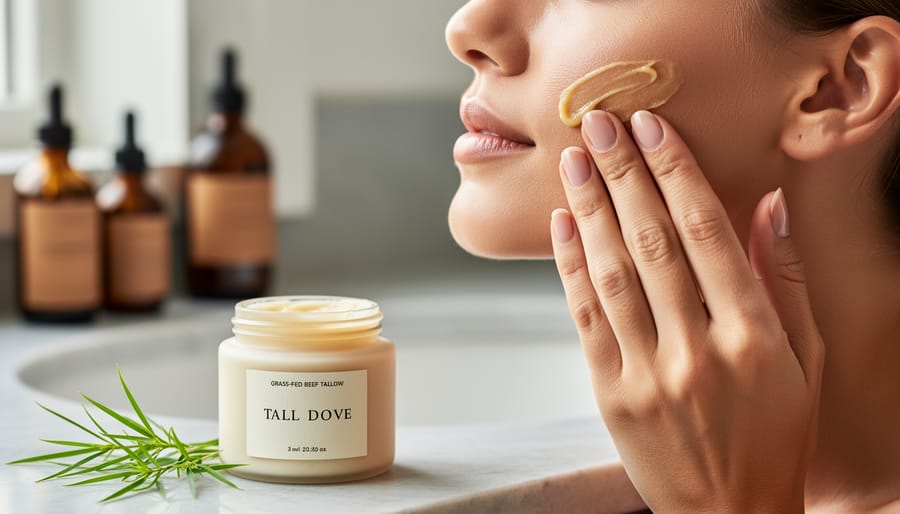
I’ll be honest: when I first heard about people slathering beef fat on their faces, I thought the internet had officially lost its mind. But after months of watching Wild Roman dominate my skincare feeds in 2026 and hearing friend after friend rave about their tallow-based products, I decided to put my skepticism aside and actually try it.
What I discovered surprised me. This isn’t just another TikTok trend destined to fade by next month. Wild Roman has tapped into something genuinely interesting: using grass-fed beef tallow, an ingredient our great-grandmothers would have recognized, in a way that feels both ancient and refreshingly modern. The brand claims their tallow closely mimics our skin’s natural sebum, making it incredibly compatible with our moisture barrier. Bold claim, right?
After testing their full lineup for three months on my combination skin, I’ve got thoughts. Real ones. Not the sanitized, brand-friendly kind you’ll find in press releases, but the honest breakdown you’d get from a friend who genuinely cares whether you waste your money.
If you’re standing at the crossroads between curiosity and confusion, wondering whether tallow-based skincare is legit science or elaborate snake oil, you’re exactly where I was. This review unpacks everything: the science behind why animal fat might actually be brilliant for your face, how Wild Roman’s products actually performed on real skin, what that distinct smell situation is really like, and most importantly, whether this unconventional approach deserves a spot in your routine. Let’s dig in.
What Is Wild Roman Skincare?
Wild Roman is a skincare brand that’s challenging the modern beauty industry’s obsession with complicated formulas and synthetic ingredients. Instead of following the 10-step routine trend, they’ve gone in the opposite direction, stripping skincare back to what they call “ancestral ingredients” that humans have used for thousands of years.
The brand’s philosophy centers on the idea that your skin recognizes and knows how to use ingredients it has evolved with. Their hero ingredient is grass-fed tallow, sourced from pasture-raised cattle and rendered into a nutrient-dense base that forms the foundation of their products. If you haven’t heard of tallow in skincare before, you’re not alone, it’s an old-world ingredient that’s experiencing a revival among natural beauty enthusiasts who’ve grown tired of ingredient lists they can’t pronounce.
Wild Roman combines this tallow base with cold-pressed oils and wild botanicals, creating what they describe as skin-compatible formulas. The entire line is intentionally minimal. Rather than offering dozens of products for every possible skin concern, they focus on a core collection designed to work together as a simple routine.
From what I’ve gathered from their brand materials and social presence, Wild Roman launched in 2025 and quickly gained traction among people searching for alternatives to conventional skincare. The brand positions itself for those who want effective skincare without the additives, preservatives, and fillers common in mainstream products. Their approach feels less like a beauty brand and more like a return to basics, though whether that translates to results on actual skin is what I wanted to find out.
Breaking Down the Star Ingredient: Grass-Fed Tallow
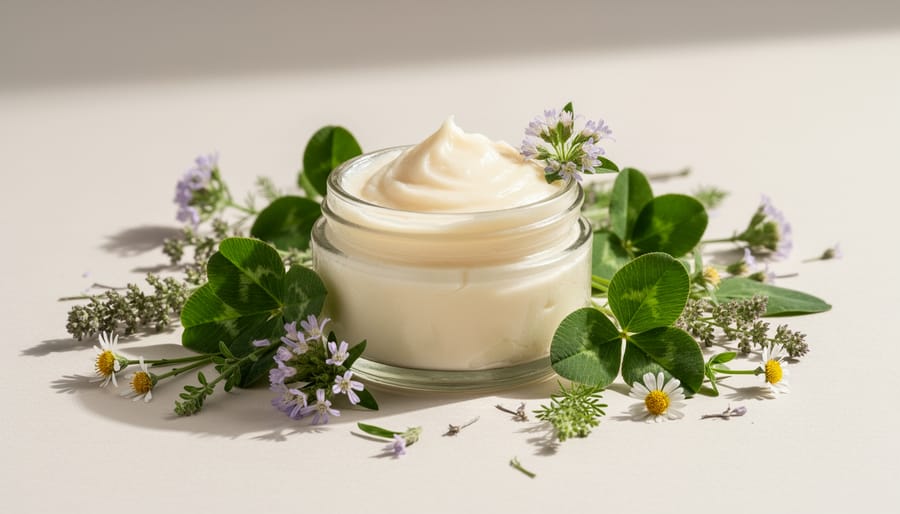
When I first heard someone describe tallow as “beef fat for your face,” I’ll admit I wasn’t rushing to slather it on. But once I understood what grass-fed tallow actually is, and how it differs from the conventional moisturizers I’d been using, it started making sense.
Grass-fed tallow is rendered fat from cattle that have been pasture-raised and fed their natural diet of grass. In skincare formulations, it’s purified through a multi-step rendering process that removes impurities while preserving the beneficial fatty acid content. Wild Roman sources their tallow from grass-fed cattle specifically because the nutrient profile is significantly richer than grain-fed alternatives, containing higher concentrations of vitamins A, D, E, and K.
- Grass-Fed Tallow
- Purified fat rendered from pasture-raised cattle, containing a nutrient-dense blend of fatty acids and fat-soluble vitamins used as a skin moisturizer.
- Skin-Compatible Ingredients
- Substances whose molecular structure closely resembles human skin’s natural lipid composition, allowing for better absorption and fewer reactions.
- Fatty Acid Profile
- The specific ratio and types of fatty acids in an ingredient, which determine how it functions on skin and its moisturizing properties.
- Bio-Identical Lipids
- Fats that mirror the lipid structure found naturally in human skin, making them highly compatible with our skin barrier function.
What makes tallow particularly interesting for skincare is its fatty acid composition. It contains roughly 50-55% saturated fats, primarily palmitic and stearic acid, alongside oleic acid and smaller amounts of linoleic acid. This mirrors human sebum more closely than most plant oils. Our skin produces these same fatty acids to protect and moisturize itself, which explains why tallow absorbs differently than, say, coconut oil or shea butter.
Compared to conventional moisturizers that rely on petroleum derivatives or heavy silicones to create a moisture barrier, tallow works with your skin’s existing structure rather than sitting on top of it. I noticed this most clearly when I applied it before bed, by morning, my skin felt nourished rather than greasy, suggesting it had actually absorbed and integrated with my skin barrier instead of just coating the surface.
The nutrient content sets it apart too. While hyaluronic acid or glycerin pull moisture into skin, tallow delivers fat-soluble vitamins that support skin repair and resilience. It’s not an either-or situation, but tallow offers something most water-based serums don’t: lipid replenishment that your skin actually recognizes and can use immediately.
The Wild Roman Formula: Cold-Pressed Oils and Wild Botanicals
While grass-fed tallow forms the foundation of Wild Roman products, the supporting cast of cold-pressed oils and wild botanicals deserves its own spotlight. These aren’t filler ingredients, they’re carefully chosen to complement tallow’s nourishing base while adding targeted benefits that single-ingredient formulas can’t deliver.
Cold-pressed oils are extracted without heat or chemical solvents, which means they retain their full spectrum of vitamins, antioxidants, and essential fatty acids. Conventional skincare often uses refined oils that have been stripped of these compounds during processing. The difference isn’t just philosophical. I noticed that Wild Roman’s oil blend absorbed differently than the highly-refined plant oils in my previous routine, less slippery on the surface, more substantial once worked in.
The specific oils Wild Roman uses weren’t fully detailed in their public materials, but cold-pressed extraction typically preserves compounds like vitamin E, phytosterols, and polyphenols that can neutralize free radicals and support skin barrier function. These are the same nutrients that get destroyed when oils are heated to high temperatures during standard manufacturing.
Wild botanicals add another dimension. Unlike cultivated plants grown for consistency, wild-harvested botanicals often contain higher concentrations of protective compounds because they’ve had to survive harsher conditions. Think of it as the skincare equivalent of grass-fed versus grain-fed, the environment shapes the nutrient profile.
What strikes me most about this approach is the restraint. Wild Roman isn’t layering twenty different extracts to create an impressive ingredient list. The formula philosophy seems to center on a few potent, minimally-processed ingredients working together rather than a kitchen-sink approach. For someone used to ten-step routines with thirty-ingredient products, that simplicity felt both refreshing and slightly unnerving at first.

My 30-Day Testing Experience
First Impressions and Texture
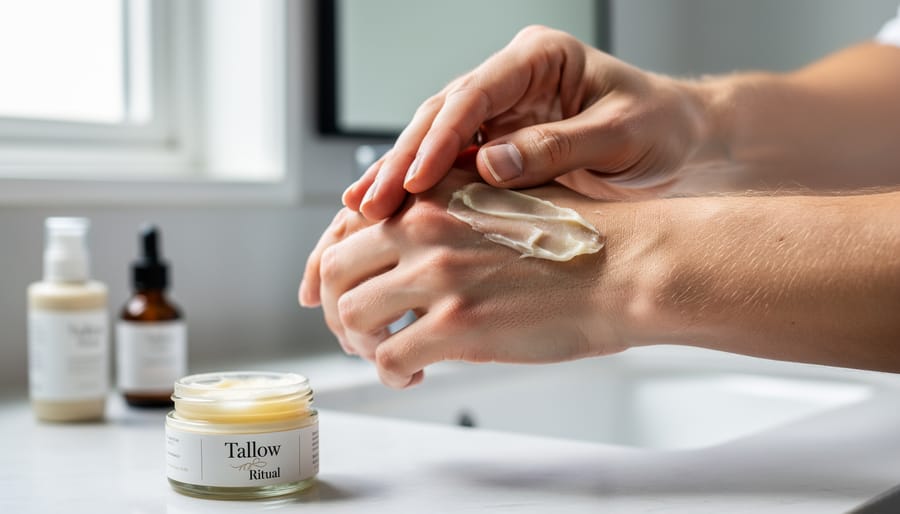
When I unscrewed the lid of my first Wild Roman product, I’ll admit I braced myself. Tallow-based skincare sounded heavy, greasy, maybe even a little off-putting. What I found instead was surprisingly luxurious. The balm had a soft, whipped consistency that felt more like a high-end face cream than anything resembling cooking fat. It warmed between my fingers and melted into my skin rather than sitting on the surface.
The packaging itself is minimal and thoughtful, simple glass jars that feel substantial without being fussy. No complicated pumps or excessive wrapping, which aligns with the brand’s back-to-basics philosophy.
Compared to conventional moisturizers, the texture is richer and requires a bit more intention. You can’t just slap it on and run out the door like a lightweight lotion. A little goes further than expected, and the initial density gives way to a smooth, almost velvety finish once it absorbs. It’s different enough that you’ll notice, but not so foreign that it feels difficult to use.
Performance Across Skin Types and Concerns
I tested Wild Roman on different parts of my face and body to see how the tallow base would handle various skin needs. On my cheeks and forehead, the balm absorbed surprisingly well, no greasy film, just a soft finish that lasted hours. My under-eye area, which gets flaky in colder months, responded beautifully; the richness worked better than my usual eye cream.
The real test came during spring allergy season when my skin gets reactive. The grass-fed tallow and botanical oils calmed redness around my nose without the stinging I often get from conventional moisturizers. I also worked it into my winter skincare routine on my hands, where it outperformed every lotion I’d tried, one application lasted through multiple hand washes.
For stubborn dry patches on my elbows, I layered it like a dry skin mask before bed. By morning, the roughness had noticeably softened. I did notice it felt heavier in humid weather, so I scaled back to nighttime use during warmer days. Sensitive areas like my neck tolerated it well with zero irritation.
The Adaptation Period
My skin didn’t hate the tallow immediately, but it didn’t quite know what to make of it either. The first week felt like introducing two people who speak different languages, my skin was accustomed to silicone slip and water-based gels, and suddenly I was asking it to process something heavier and fundamentally different.
I experienced a brief period of increased oiliness around day three, particularly across my T-zone. This isn’t unusual when switching from conventional moisturizers that often contain mattifying agents or silicones that create a temporary barrier. My skin was essentially recalibrating its own oil production now that it was receiving fats it could actually absorb and use.
By week two, things settled considerably. The oily patches balanced out, and my skin started responding more positively, that tight, dehydrated feeling I’d normalized with my previous routine disappeared. Most people I’ve spoken with who’ve made similar switches report a full adaptation period of two to three weeks, though those with extremely oily skin may take closer to four weeks to see the benefits outweigh the adjustment phase. If you’re testing Wild Roman or any tallow-based product, give it at least two weeks before deciding it’s not working.
How Wild Roman Compares to Similar Natural Skincare Brands
Wild Roman occupies a unique position in the tallow-based skincare movement, but it’s not the only brand returning to traditional fat-based formulations. Understanding where it fits requires looking at the broader natural skincare landscape.
In terms of ingredient philosophy, Wild Roman sits firmly in the ancestral skincare camp alongside brands like Nourish Me Organics and Primally Pure. All three center their formulations around grass-fed tallow, but Wild Roman distinguishes itself by emphasizing wild botanicals rather than essential oils or standard organic extracts. This positions it as slightly more earthy and less aromatic than competitors who lean heavily into scent profiles.
The texture experience differs notably across tallow brands. Wild Roman’s consistency falls somewhere between the very firm, balm-like texture of Vintage Tradition and the whipped, mousse-style formulations from Fatco. It requires warming between your hands before application but spreads more easily than some competitors, a middle ground that feels deliberate rather than compromised.
When it comes to minimalist skincare brands that aren’t tallow-based, Wild Roman shares philosophical ground with companies like Pai Skincare and True Botanicals: short ingredient lists, transparent sourcing, and a rejection of conventional preservative systems. However, while those brands use plant-based emollients, Wild Roman’s animal-derived foundation represents a more polarizing choice that appeals to a specific subset of the natural beauty community.
| Brand | Ingredient Approach | Texture Type | Best Suited For |
|---|---|---|---|
| Wild Roman | Grass-fed tallow + wild botanicals | Medium-firm balm | Those wanting wild-sourced ingredients |
| Primally Pure | Tallow + essential oils | Rich cream | Aromatherapy enthusiasts |
| Fatco | Tallow + standard botanicals | Whipped texture | First-time tallow users |
| True Botanicals | Plant-based, no tallow | Lightweight serum/cream | Vegan minimalists |
The target audience for Wild Roman skews toward those already familiar with natural skincare who want to experiment with ancestral ingredients without sacrificing a modern aesthetic. Unlike some similar skincare brand launches that position themselves as gateway products, Wild Roman assumes a certain comfort level with unconventional textures and minimal packaging, it’s not trying to convert the Glossier crowd.
What sets Wild Roman apart is its unapologetic commitment to wild-harvested botanicals paired with tallow, creating a brand identity that feels more foraging-focused than farm-to-face. That distinction matters if you’re drawn to the romance of wild ingredients, but it won’t fundamentally change your skin results compared to thoughtfully formulated competitors.
Who Should (and Shouldn’t) Try Wild Roman
Wild Roman works best for people who’ve already dipped their toes into natural skincare and are ready to try something truly unconventional. If you gravitate toward minimalist routines, appreciate ingredient transparency, and don’t mind a learning curve, this brand could be exactly what you’ve been looking for. I found it particularly effective for dry or dehydrated skin types, the grass-fed tallow and cold-pressed oils deliver deep moisture without the greasy residue you’d expect from such a rich formula.
People with sensitive or reactive skin might also appreciate Wild Roman’s streamlined approach. Because the formulations rely on just a handful of skin-compatible ingredients rather than lengthy ingredient lists full of potential irritants, there’s less risk of triggering a reaction. If you’ve struggled with conventional moisturizers that promise hydration but deliver breakouts or irritation, the botanical-forward formula here offers a refreshing alternative.
That said, Wild Roman isn’t for everyone. If you prefer lightweight, fast-absorbing lotions or need something that layers seamlessly under makeup within minutes, the texture and absorption time might frustrate you. Strict vegans will obviously need to look elsewhere given the animal-derived tallow base. And if you’re completely new to natural skincare, jumping straight to tallow might feel overwhelming, you might want to start with something more conventional before making this leap.
Those shopping for skincare set gifts should consider whether the recipient already embraces natural beauty products; Wild Roman makes a thoughtful gift for the right person, but it’s not a safe bet for someone who lives and breathes their conventional routine.
Questions I Had Before Trying (And the Answers I Found)
Before I ordered my first jar, I had a list of questions, most of them born from years of using conventional skincare. Here’s what I discovered after actually living with these products for a month.
Does tallow-based skincare smell like beef?
Not at all. Wild Roman’s tallow is rendered and purified, leaving virtually no animal scent, the cold-pressed oils and botanicals provide a subtle, earthy aroma that fades quickly after application.
How long does it last once opened?
Tallow is naturally stable, and the products maintain their integrity for 6-12 months when stored properly away from direct heat and sunlight. I noticed no changes in texture or scent throughout my testing period.
Can I wear it under makeup?
Yes, but give it 10-15 minutes to fully absorb. I found it works best with powder or mineral foundations, liquid formulas can slide around if you apply too much product.
Is this safe for sensitive or acne-prone skin?
Tallow is non-comedogenic and mimics skin’s natural sebum, which many people with reactive skin tolerate well. That said, patch-test first, everyone’s skin chemistry is different.
Are there vegan alternatives that work similarly?
Plant-based ingredients like shea butter or jojoba oil offer moisture, but they lack tallow’s complete fatty acid profile that mirrors human skin lipids. The experience isn’t quite identical.
The biggest surprise? How quickly my skin adjusted once I stopped overthinking it. I’d been worried about texture, breakouts, and whether my routine would suddenly become complicated. Instead, I found that tallow skincare simplifies everything, fewer steps, shorter ingredient lists, and results that showed up faster than I expected. The learning curve exists, but it’s shorter than switching between most conventional brands.
After a month of testing Wild Roman’s tallow-based formulations, I can say this isn’t just another fleeting skincare trend, it’s a thoughtful return to ingredients our skin actually recognizes. The grass-fed tallow, cold-pressed oils, and wild botanicals delivered on their promise of deep nourishment without the heaviness I initially worried about. My skin felt softer, more resilient, and less reactive than it had in months.
That said, Wild Roman isn’t for everyone. If you’re committed to vegan skincare, obviously this won’t work for you. If you need lightweight, quick-absorbing products that layer invisibly under makeup, the richer texture might feel like too much. But for those dealing with persistent dryness, sensitivity, or frustration with synthetic-heavy formulations that never quite deliver, this brand deserves serious consideration.
The real question isn’t whether tallow belongs in modern skincare, clearly it does for many people. The question is whether it belongs in your routine. Consider your skin’s actual needs rather than what’s trending. Pay attention to how your current products make you feel. And if you’re curious about ancestral ingredients backed by genuine skin compatibility, Wild Roman offers a well-formulated entry point.
Skincare should work with your biology, not against it. Whether that means embracing tallow or sticking with what already serves you well, the choice is yours to make, informed and intentional.