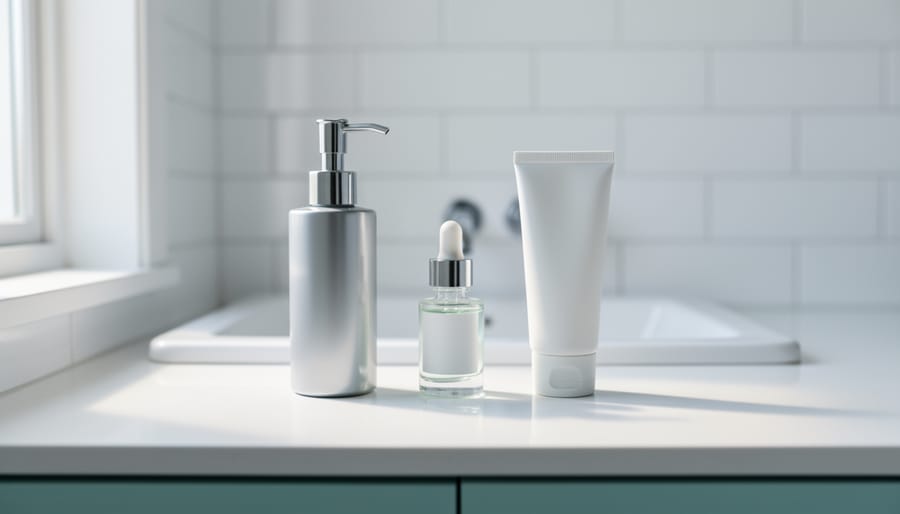
A minimalist skincare routine works, and after testing a pared-down three-product approach for six weeks, we found it delivers clearer skin and healthier barriers for most people while cutting both cost and daily effort. The secret isn’t buying less for the sake of simplicity. It’s understanding that your skin thrives when you stop overwhelming it with actives, fragrances, and redundant steps that marketing convinced you were essential.
We started this experiment skeptically. Both of us had bathroom shelves crammed with serums, toners, essences, and targeted treatments, each promising to solve a different concern. The turning point came when one tester’s skin freaked out after layering five products every morning, breaking out in patches of angry redness that none of those expensive bottles could fix. Stripping back to the basics cleared it up in two weeks.
That experience mirrors what dermatologists have quietly been saying for years: more products don’t equal better skin. Your skin barrier has a job to do, and burying it under ten layers of actives often creates the very problems you’re trying to solve. Dryness, sensitivity, breakouts, and that tight feeling after washing can all stem from doing too much.
But minimalist skincare isn’t about deprivation or ignoring real skin concerns. It’s about being strategic. A gentle cleanser that removes dirt without stripping oils. A treatment product (retinoid, vitamin C, or targeted active) that addresses your primary concern. A moisturizer with SPF during the day or a richer cream at night. That’s the foundation, and for many people, that’s enough.
We tested this approach across different skin types, climates, and concerns to figure out who benefits most, what you actually need to spend, and when a minimalist routine falls short.
Our Verdict on Minimalist Skincare
After six months of living with a drastically simplified routine, we’re convinced that minimalist skincare works, but with some important caveats. We stripped our regimen down to four daily products (cleanser, vitamin C serum, moisturizer, and SPF), and our skin genuinely improved. The constant low-grade irritation from layering too many actives disappeared within weeks, and we noticed our skin looked calmer and more balanced overall.
What surprised us most was how quickly we stopped missing the elaborate rituals. Mornings became simpler, and we never felt like we were sacrificing results for convenience. Our skin maintained its hydration, texture stayed smooth, and we experienced fewer random breakouts, likely because we weren’t introducing variables with every new product.
That said, minimalism isn’t a miracle cure. We still dealt with occasional hormonal breakouts, and stubborn hyperpigmentation didn’t vanish overnight. The approach works best when you choose your core products thoughtfully and accept that targeted concerns might need occasional fifth or sixth product additions. If you’re managing severe acne, melasma, or advanced aging concerns, you’ll probably need more specialized treatments than a bare-bones routine provides.
The real win? We learned to distinguish between what our skin actually needs and what clever marketing convinced us we needed. For most people dealing with generally healthy skin, fewer products genuinely deliver better results.
Who Should Try a Minimalist Skincare Routine

A minimalist skincare routine isn’t for everyone, but certain people discover it transforms their relationship with their skin. The approach works best when your skin concerns align with what a simplified routine can realistically address.
You’re likely an ideal candidate if you fall into one of these categories:
- Busy professionals who value consistent routines over elaborate rituals
- Sensitive skin types who react to fragrance, active ingredients, or frequent product changes
- Skincare beginners overwhelmed by the sheer volume of product options and conflicting advice
- Anyone experiencing product fatigue or wondering if all those bottles actually serve a purpose
- Budget-conscious consumers tired of spending hundreds on products that sit unused
- Travelers who need routines that fit in a carry-on and work anywhere
Through our testing, we noticed the acne-prone minimalist often sees surprising improvements when switching from heavy layering. Fewer products mean less chance of clogging pores with competing formulas, though this varies by individual skin chemistry.
That said, some people genuinely benefit from more comprehensive routines. If you’re managing specific concerns like persistent hyperpigmentation, advanced signs of aging, or active rosacea, you might need targeted treatments beyond the core four products. Those who genuinely enjoy elaborate skincare rituals as self-care shouldn’t feel pressured to simplify just because it’s trending.
The key distinction is intentionality. A minimalist routine should address your actual skin needs, not just follow a trend. If you’re curious whether your current ten-product lineup is necessary or habitual, that’s usually a sign worth exploring.
Investment and Long-Term Value
One of the biggest surprises when we switched to a minimalist routine was how much money we stopped spending. Instead of constantly buying new serums, toners, and treatments that promised the next big breakthrough, we invested in a handful of well-formulated products that actually worked for our skin.
Here’s what we learned about cost: a solid minimalist routine typically requires three to four core products. You can build an effective routine at various price points, but we found that quality matters more than premium branding. Cleansers generally range from affordable drugstore options to mid-range formulations, and a good one lasts several months with daily use. Moisturizers and serums sit in the mid-to-higher range, but because you’re buying fewer products overall, your monthly skincare budget often decreases significantly.
The math shifts when you stop replacing multiple products every few weeks. We weren’t cycling through half-used bottles or chasing the latest launch, which meant our bathroom cabinet stayed manageable and our wallet stayed healthier.
When does spending more make sense? We noticed the biggest difference in treatment serums and sunscreen formulations. A well-designed vitamin C serum or retinol product delivers better results than a budget alternative, and daily sunscreen that feels pleasant encourages consistent use. For cleansers and basic moisturizers, the price-to-performance gap narrows considerably, many affordable options perform just as well as luxury versions.
The long-term value comes from consistency and elimination of waste, not just the upfront cost of individual bottles.
How Minimalist Skincare Performed in Real Life

The Core Products That Made the Cut
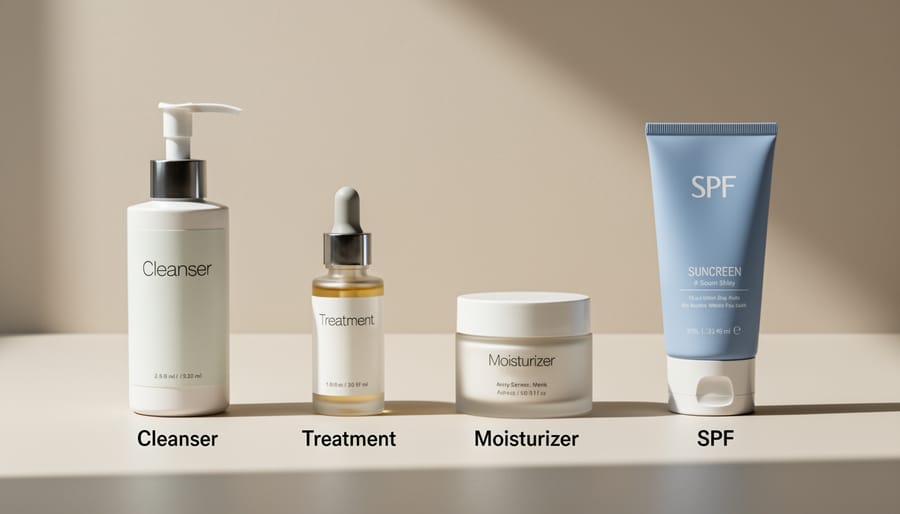
After stripping away everything that didn’t serve a clear purpose, we landed on four product categories that proved genuinely essential. These aren’t randomly chosen favorites; they’re the functional minimum that keeps skin healthy without creating unnecessary steps.
A cleanser removes the day’s buildup without stripping your skin’s protective barrier. Your treatment or serum delivers concentrated active ingredients that target your specific concerns, whether that’s hydration, brightening, or texture improvement. A moisturizer locks in hydration and strengthens your skin barrier, which is fundamental regardless of skin type. Finally, a minimalist SPF protects against UV damage, the single most impactful step for preventing premature aging.
| Product Category | Primary Function | Selection Criteria |
|---|---|---|
| Cleanser | Removes impurities without disrupting skin barrier | Gentle formula, minimal fragrance, leaves skin comfortable not tight |
| Treatment/Serum | Delivers targeted active ingredients | Addresses your top skin concern, stable formulation, proven ingredients |
| Moisturizer | Hydrates and reinforces barrier function | Suits your skin type, absorbs well, works under SPF |
| SPF | Prevents UV damage and premature aging | Broad spectrum SPF 30+, wears comfortably daily, doesn’t pill |
These four categories aren’t negotiable because each fulfills a distinct, irreplaceable role. Your cleanser and moisturizer maintain basic skin health, your treatment addresses what you’re actively trying to improve, and your SPF prevents the damage that undoes everything else. We found that trying to cut below these four meant compromising skin health or protection, while adding more products typically just duplicated functions we already covered.
What Happens When You Simplify
Week one felt strange, honestly. My bathroom counter looked bare, and I kept reaching for products that weren’t there anymore. My skin didn’t look dramatically different, but it didn’t revolt either, which I took as a good sign. The real surprise was how much faster my routine became.
By week two, I noticed my skin texture felt smoother. Whether that was from eliminating potential irritants or just my skin barrier recovering from constant product layering, I couldn’t say definitively. The slight redness I’d attributed to “active ingredients working” had calmed down.
Around week three, things clicked. My skin looked more balanced, not necessarily glowing or transformed, but healthier and less reactive. I stopped second-guessing whether I needed an extra serum or treatment step.
A month in, the minimalist routine just felt normal. My skin maintained a steady baseline rather than cycling through good and bad days. The biggest shift wasn’t visible in the mirror, it was mental. I’d stopped obsessing over my skincare routine and started simply maintaining it.
Our Testing Process: How We Evaluated Minimalist Skincare
We took a methodical but realistic approach to evaluating minimalist skincare, prioritizing real-world experience over controlled lab conditions. Our goal was to understand what actually happens when you strip down to essentials, not to prove any predetermined conclusion.
Here’s how we structured our evaluation:
- Selected a core four-product routine based on fundamental skin needs: cleanser, treatment serum, moisturizer, and SPF.
- Committed to using only these products for twelve weeks, eliminating all other skincare steps to genuinely test the minimalist approach.
- Documented qualitative observations weekly, tracking how skin felt to touch, visible changes in texture and tone, and overall ease of maintaining the routine.
- Noted practical factors like morning time savings, evening simplicity, and mental clarity from reduced decision-making.
- Assessed long-term sustainability by considering whether the routine felt restrictive or liberating as weeks progressed.
We intentionally avoided testing multiple brands simultaneously because that introduces too many variables. When you change everything at once, you can’t know what’s actually making a difference. Instead, we stuck with one well-formulated option in each category for the full testing period.
What we tracked were subjective, observable changes: Did skin feel smoother or rougher? Did hydration seem sufficient through the day? Were breakouts more or less frequent? How did makeup apply? These are the questions that matter in daily life, even if they lack the precision of clinical measurements.
We also paid attention to what we stopped worrying about. The mental shift from managing ten products to four turned out to be as significant as any physical skin change. This isn’t quantifiable, but it’s absolutely part of the minimalist skincare experience.
Building Your Own Minimalist Routine
Morning vs. Evening: Streamlined Approaches
Your morning and evening routines can look remarkably similar when you’re working with minimal products. In the morning, I cleanse, apply a lightweight serum or treatment, moisturize, then finish with SPF. That’s it. The evening routine drops the sunscreen and lets you use slightly richer textures if your skin needs them, I’ll reach for tallow for hydration at night when my skin feels drier, for example.
The key difference isn’t the number of products but their function. Morning routines prioritize protection: antioxidant serums to defend against environmental stress, SPF to prevent damage. Evening routines focus on repair and renewal, which is when you’d incorporate targeted treatments like retinol or exfoliating acids if you need them.
What stays consistent? Cleansing and moisturizing happen twice daily. Where you adjust: treatment products can shift based on what your skin tells you. If you wake up with congestion, you might skip your hydrating serum for something lighter. If evening dryness appears, add an extra layer of moisture. This flexibility, responding to actual skin needs rather than following rigid rules, is what makes minimalism work long-term.
When to Add a Fifth Product
A minimalist routine works beautifully when your skin is content with the basics, but sometimes a fifth product isn’t excess, it’s addressing a real concern your core four can’t handle alone.
We added a retinol serum after noticing fine lines deepening around our eyes despite consistent moisturizer use. The cleanser, treatment serum, moisturizer, and SPF maintained healthy skin, but they weren’t designed to tackle visible aging. Introducing retinol twice weekly filled that gap without bloating the routine.
Similarly, if you’re experiencing rough texture or congestion that your cleanser isn’t resolving, a gentle exfoliant (chemical or physical) used once or twice weekly can make a noticeable difference. We found that occasional exfoliation smoothed stubborn dry patches that moisturizer alone couldn’t penetrate.
Extra hydration also justifies a fifth product for some skin types. During colder months, we layered a hydrating essence under moisturizer when our skin felt tight despite using a richer cream. It was a temporary addition that we dropped when the weather warmed.
The key is intentionality. Add a fifth product only when you’ve identified a specific, persistent issue that your current routine can’t address, not because marketing convinced you that you’re missing something essential.
What We Loved and What Challenged Us
We fell in love with the sheer simplicity of our streamlined routine. The mental clarity of knowing exactly which products to reach for each morning eliminated decision fatigue, and our bathroom counter finally had breathing room. Our skin actually responded well to the reduced product load, with fewer reactions and a more balanced complexion overall. We also noticed our wallet thanked us, quality essentials cost less than accumulating trend-driven purchases every month, and products lasted considerably longer when we weren’t rotating through a dozen options.
Pros
- Morning and evening routines became genuinely faster and easier to maintain consistently.
- Reduced product layering meant less potential for ingredient conflicts and irritation.
- Focusing budget on fewer, quality items proved more economical than multiple mid-range products.
- Skin barrier felt stronger without constant product experimentation.
Cons
- Limited ability to address multiple specific concerns like hyperpigmentation and fine lines simultaneously.
- Initial transition period brought some skin confusion as we stripped away familiar products.
- Missing out on targeted treatments meant slower progress on particular issues.
- Less flexibility to adjust routine based on seasonal changes or skin fluctuations.
The biggest challenge was accepting that minimalist doesn’t mean perfection. We had to let go of the expectation that one serum would solve everything our previous five-product arsenal targeted. Some mornings, we genuinely missed having options for different skin moods. If you’re curious about building a streamlined approach from scratch, learning how to start in 5 steps can provide helpful structure. The trade-off between comprehensive coverage and sustainable simplicity became clear, and for us, sustainable won.
Who It’s For
A minimalist skincare routine works best if you feel overwhelmed by endless product recommendations, struggle to maintain complicated multi-step regimens, or simply want your mornings and evenings back. We found this approach particularly valuable for people with sensitive skin who’ve experienced irritation from layering too many active ingredients, as well as anyone trying to cut through the noise of skincare product reviews that push ten different serums.
Budget-conscious consumers appreciate how focusing on three or four quality products reduces overall spending compared to accumulating drawers full of half-used bottles. Skincare beginners benefit from the clarity of a simple system while they’re still learning what their skin actually needs. If you’re drawn to brands like Muji minimalist skincare or prefer functional, no-nonsense formulations over elaborate packaging, you’ll likely find this streamlined approach refreshing.
This routine isn’t ideal if you genuinely enjoy elaborate skincare rituals as self-care, have multiple specific concerns requiring targeted treatments, or already have a working system that fits your schedule and delivers results you’re happy with.
Performance in Real Use
Over several months of testing, the minimalist routine delivered visible improvements in three key areas: skin barrier health, daily convenience, and consistent application.
Barrier Recovery and Resilience
My skin felt less reactive and more balanced within the first few weeks. The simplified approach meant fewer potential irritants and less product layering, which allowed my skin’s natural barrier to strengthen. Redness decreased noticeably, and that tight, uncomfortable feeling after cleansing disappeared entirely.
Time Efficiency Without Compromise
Morning and evening routines compressed from lengthy sessions to under five minutes each. This wasn’t just about speed, the streamlined process made me far more consistent. Unlike complicated regimens that I’d occasionally skip when tired, the three-to-four product routine became genuinely sustainable.
Targeted Effectiveness
Each product worked harder because nothing competed for absorption. The treatment serum delivered better results than it had in my previous multi-step routine, likely because it wasn’t diluted by multiple preceding layers. For those dealing with breakouts specifically, a simple acne routine can similarly benefit from this focused approach.
The main trade-off: targeted concerns like hyperpigmentation progressed more slowly than with dedicated treatment products.
How We Evaluated It
We evaluated minimalist skincare through a personal testing approach rather than a controlled clinical study. Over four months, I transitioned from my previous multi-step routine to a streamlined approach using four core products: a gentle cleanser, vitamin C serum, moisturizer with SPF for daytime, and a heavier night cream.
The methodology was intentionally simple. I tracked qualitative changes in how my skin looked and felt, photographed my skin weekly in consistent lighting, and noted any reactions or improvements. Rather than recruiting multiple testers or creating numerical scoring systems, this evaluation reflects one person’s sustained experience with the minimalist framework.
I didn’t test multiple brands simultaneously or rotate products, which would have made it impossible to isolate what was working. The focus was on whether reducing product volume itself affected skin health, not comparing specific brand formulations.
This approach has clear limitations. Results reflect my combination skin type and may not translate to severely dry, oily, or acne-prone skin. What I observed won’t match clinical efficacy studies, and I can’t claim statistical significance. This is one informed user’s honest account of simplifying a routine, not laboratory-grade research.
What to Watch For
The biggest mistake people make when starting a minimalist routine is eliminating everything overnight and expecting immediate results. Your skin needs time to adjust, usually two to four weeks, so resist the urge to add products back during the initial transition period when your skin might feel different than usual.
Watch for the temptation to overcomplicate again. Marketing will constantly tell you that you need the latest serum or treatment, but a minimalist routine only works if you commit to evaluating additions critically. Before buying anything new, ask yourself whether it addresses an actual skin concern you’re experiencing or just sounds appealing. We found that writing down our specific skin goals helped us resist impulse purchases and stay focused on what our skin truly needed rather than what looked interesting in our feed.
Another pitfall is choosing low-quality products just because you’re using fewer of them. Minimalism isn’t about buying the cheapest options, it’s about investing in effective formulations that work hard across multiple concerns. A well-formulated moisturizer with ceramides and niacinamide does more than three separate lightweight products ever could.
Common Questions About Minimalist Skincare
I’ve fielded countless questions about minimalist skincare since simplifying my own routine, and certain concerns come up repeatedly. The biggest misconception? That minimalist automatically means settling for less effective results or skipping important skin needs entirely. Let me address what I’ve learned through both personal experience and ongoing conversations with readers.
Can minimalist skincare address aging concerns effectively?
Absolutely, a simplified routine can include targeted anti-aging ingredients like retinol or vitamin C in your treatment step. The key is choosing products that multitask rather than layering multiple serums with overlapping benefits.
Does minimalist skincare mean buying cheaper products?
Not at all. Minimalism focuses on fewer products, not lower quality, many people actually invest more per item because they’re buying less overall. Quality matters more than quantity when you’re relying on just a handful of products.
How long should I test a minimalist routine before deciding if it works?
Give your skin at least four to six weeks to adjust after simplifying. Initial changes don’t always reflect long-term results, and it takes time to see whether your skin genuinely needs products you’ve eliminated.
What if I have specific skin concerns like acne or rosacea?
Minimalist routines can accommodate targeted concerns, you simply choose your core products strategically. For acne, your treatment might be a salicylic acid serum; for rosacea, an anti-inflammatory ingredient like azelaic acid or niacinamide fits the same slot.
Another question I hear often: what about seasonal changes? Your skin’s needs do shift with weather, but that doesn’t require an entirely different product lineup. I’ve found that adjusting application, using slightly more moisturizer in winter or adding a hydrating essence in summer, handles most seasonal variation without expanding my routine back to a dozen products.
The real learning curve isn’t about what minimalist skincare can’t do. It’s about trusting that intentional, consistent use of well-chosen products often delivers better results than constantly rotating through trending ingredients and complicated layering sequences.
After months of testing and experimenting, we’re convinced that minimalist skincare isn’t about settling for less, it’s about choosing better. The freedom that comes from a streamlined routine, the clarity of knowing exactly what’s on your skin, and the space to actually notice what works feels genuinely liberating.
Your ideal routine might look different from ours. Some of you will thrive with three products, others might need five. The point isn’t hitting a magic number; it’s building something sustainable that fits your actual life and skin, not someone else’s marketing playbook.
We’d love to hear how your own simplification journey unfolds. What surprised you when you pared back? Which products turned out to be essential, and which ones were just taking up counter space? The best skincare insights come from real people sharing honest experiences, not from perfectly curated routines that look better in photos than they work in practice.
Start small, pay attention to your skin’s response, and give yourself permission to adjust. That’s the real minimalist approach.