If you’ve spotted Koseon skincare while scrolling through your feed or browsing at your local retailer, you’re probably wondering whether this relative newcomer deserves a spot in your routine. I get it. The skincare market in 2026 feels saturated with brands making bold promises, and separating genuine innovation from clever marketing isn’t always straightforward.
Koseon emerged as part of the recent wave of brands positioning themselves between drugstore accessibility and prestige pricing. What caught my attention wasn’t just their sleek packaging or their focus on barrier-repair ingredients (though both are notable). It was the number of people asking me directly whether this brand lives up to its claims about delivering “clinical-grade results without the clinical price tag.”
After testing their core products and examining their formulations against established competitors, I found myself genuinely surprised by a few standout performers. But I also noticed some gaps that might matter depending on your specific skin concerns and budget.
This isn’t about declaring Koseon the next holy grail or dismissing them as just another Instagram brand. Instead, I’ll walk you through what makes their approach different, which products actually deliver on their promises, and how they stack up against the trusted names already sitting on your bathroom shelf. Because the real question isn’t whether Koseon is trendy. It’s whether their products work for real skin dealing with real concerns, and whether they’re worth your money compared to what you’re already using.
What Is Koseon Skincare? Understanding This Emerging Brand
Koseon is making quiet waves as a new skincare brand that appeared on the scene in 2026, positioning itself squarely in the crowded eye care market with collagen-based treatments. Unlike legacy brands with decades of consumer trust and extensive product catalogs, Koseon has launched with a focused approach: targeting under-eye concerns through peptide and collagen formulations.
What sets Koseon apart is its entry strategy. Rather than building a traditional brand presence through major retailers or a robust website, the brand seems to be testing the waters through third-party platforms like eBay and Ubuy, where you’ll find listings for their Collagen Eye Patches in 7-piece sets. This approach is increasingly common for emerging skincare companies in 2026, using marketplace validation before investing in full-scale distribution.
The brand’s 2026 launch positions it among a wave of collagen-focused eye treatments promising to address puffiness, dark circles, and hydration. While established players like Abib and Peter Thomas Roth have built reputations over years of formulation refinement and consumer feedback, Koseon is banking on specific claims around peptide-powered deep collagen delivery.
Current availability appears limited to online marketplaces rather than traditional beauty retailers or direct-to-consumer channels. This distribution pattern tells us we’re looking at a brand in its early growth phase, which brings both opportunities for competitive pricing and questions about long-term product consistency and customer support that more established brands typically offer.
The Product Lineup: What Koseon Actually Offers
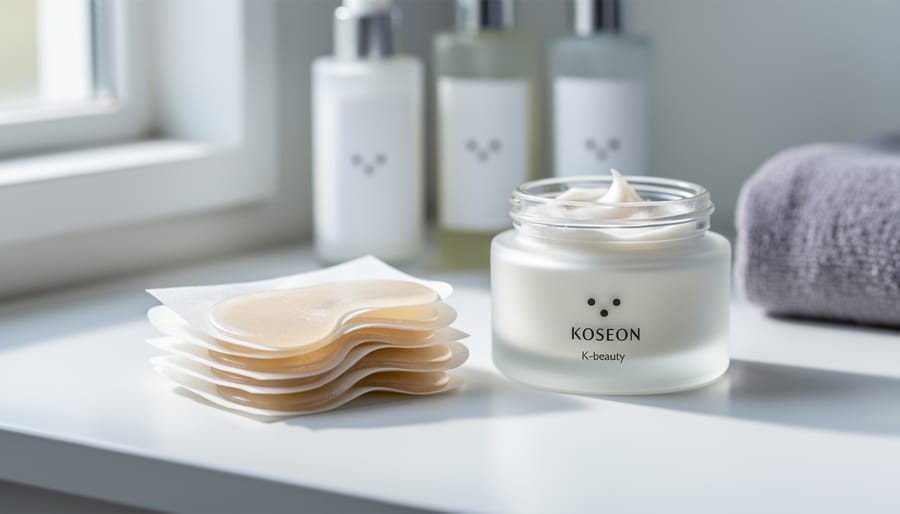
Here’s what we know about Koseon’s product range so far. The brand launched in 2026 with a focused lineup centered on collagen-based under-eye treatments. Their signature product is the Collagen Eye Patches, packaged in 7-piece sets that target puffiness and dark circles. If you’re trying to choose skincare sets for targeted concerns, this smaller format differs from the 30- or 60-patch bulk containers many established brands offer.
Right now, you’ll find Koseon primarily through online marketplaces rather than direct retail. The Collagen Eye Patches appear on eBay, where listings show limited inventory, typically around 10 units available with just a handful sold at the time of this writing. You’ll also spot them on Ubuy’s international platform, where they’re marketed as “2026 New 7 PCS Peptide-Powered Deep Collagen Eye Mask.” That “peptide-powered” descriptor shows up consistently across listings, suggesting it’s a core part of their formulation story.
What stands out is what we don’t see yet. There’s no official Koseon website, no brand Instagram account building a skincare community, and no expanded product line beyond these eye patches. This isn’t unusual for a brand testing the waters in a crowded market, but it does mean you’re buying based on product claims rather than brand transparency.
The 7-piece format is worth noting. It’s enough for a week of daily use or two weeks if you alternate days, which gives you a realistic trial period without committing to a full-size jar. For a new brand without customer reviews or dermatologist endorsements, that smaller commitment makes sense. You get to test whether the collagen and peptide formulation actually delivers on those brightness and depuffing promises before investing in a larger supply.
Formulation Analysis: What’s Inside These Eye Patches
The Science Behind Collagen Eye Masks
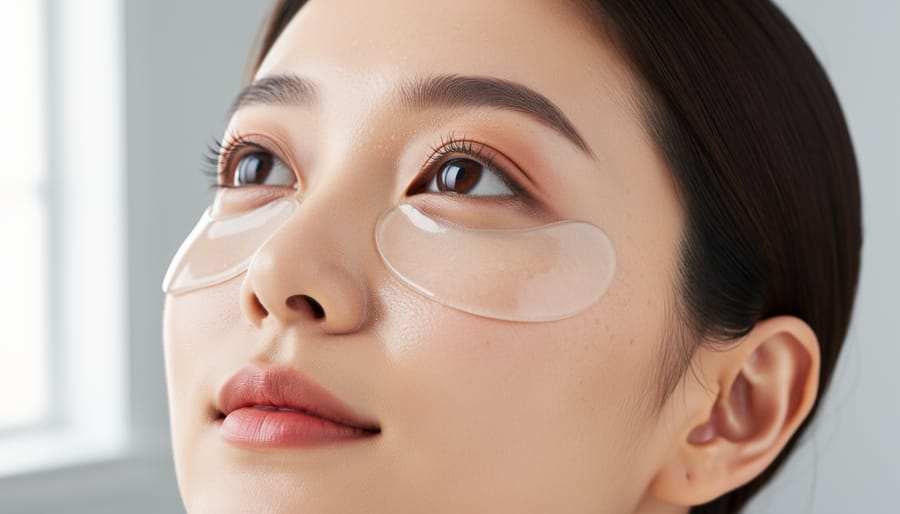
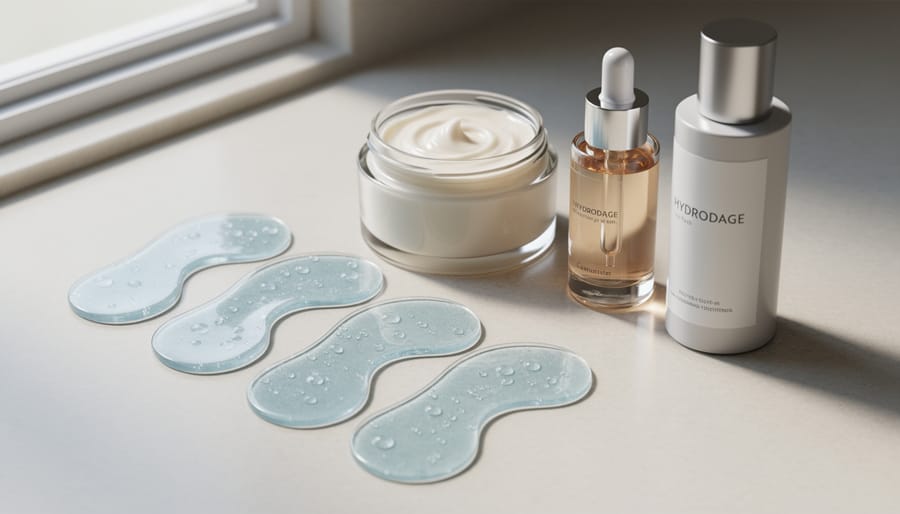
Collagen eye masks work by sitting on the delicate under-eye area and delivering hydrating ingredients through a gel or hydrogel patch system. The collagen in these products doesn’t magically rebuild your skin’s structural support. Your skin’s natural collagen framework lives deep in the dermis, where topical products struggle to penetrate effectively.
What these patches actually do is provide temporary hydration and plumping. The gel material creates an occlusive barrier that prevents water loss, while humectants in the formula draw moisture to the skin’s surface. This makes fine lines look softer and gives that fresh, dewy appearance you see in before-and-after photos. Research on topical collagen effects suggests benefits come primarily from moisturization rather than collagen absorption.
The cooling effect also helps reduce puffiness temporarily by constricting blood vessels. Think of it like putting a cold compress under your eyes, but in a more convenient, ingredient-packed format. These results typically last a few hours, making eye patches ideal for special occasions or morning routines when you need a quick refresh.
Your body produces collagen internally through nutrition and natural processes. Topical collagen serves a different purpose: acting as a film-forming agent and moisture barrier rather than replacing what you’ve lost to aging. That’s why consistent use matters more than expecting overnight transformation from a single application.
Peptide-Powered Claims: Marketing vs. Reality
You’ve probably seen “peptide-powered” stamped across a dozen eye products lately, and it’s easy to assume it means something revolutionary. In skincare terminology, peptides are short chains of amino acids that can signal skin cells to produce more collagen or support barrier repair. They’re legitimate ingredients with proven benefits in certain formulations, particularly for fine lines and firmness over time.
Here’s the gap between marketing and what you’ll actually experience: peptides work slowly and subtly. They’re not magic wands that erase years of eye area damage in one application. When a brand highlights peptides in an eye patch, you’re getting a temporary delivery system for these ingredients, not a clinical treatment. The contact time matters, and while patches can help peptides penetrate better than a quick rinse-off product, expecting dramatic overnight transformation sets you up for disappointment.
As a consumer evaluating peptide claims, look past the buzzword. Ask yourself whether the product specifies which peptides it contains (Matrixyl, Argireline, copper peptides each do different things), how much time the patch stays on your skin, and whether the price reflects genuine peptide concentration or just trendy labeling. Most importantly, remember that consistent use of any well-formulated eye treatment over weeks yields better results than chasing the newest peptide promise.
Performance Claims Breakdown: Bright, Hydrated, and Depuffed
Koseon promises three headline benefits: brighter, hydrated, and depuffed under-eyes. Let’s unpack what these claims mean and what you can realistically expect from eye patches making these promises.
The depuffing claim is the easiest to deliver. Eye patches work through a combination of cooling contact and occlusive hydration, both of which temporarily reduce fluid accumulation under the eyes. The physical cooling effect constricts blood vessels, while the gel consistency encourages lymphatic drainage. Most users see visible depuffing within 15 to 20 minutes, but this result fades within a few hours. If you’re dealing with chronic puffiness from allergies or lack of sleep, eye patches offer a quick cosmetic fix rather than a long-term solution.
Dark circle reduction is trickier because dark circles have different causes. If yours stem from dehydration or thin skin showing underlying blood vessels, the hydration boost from collagen and peptides can make a subtle difference over several weeks of consistent use. However, if your dark circles are genetic hyperpigmentation or structural shadowing from volume loss, topical patches won’t dramatically change their appearance. The “bright” claim likely refers to temporary plumping that makes the area look fresher rather than actual pigment lightening.
Hydration is where most eye patches shine, and it’s particularly valuable for winter under-eye hydration when indoor heating strips moisture from delicate skin. The occlusive patch design forces ingredients to penetrate rather than evaporate, delivering a hydration surge that smooths fine lines and improves skin texture. This benefit is cumulative with regular use, unlike the fleeting depuffing effect.
The catch? These three benefits rely heavily on consistent application. Using eye patches once before an event gives you temporary depuffing and a hydration boost. Achieving sustained improvements in dark circles and skin texture requires using them two to three times weekly for at least a month. That’s worth factoring into your value calculation.

How Koseon Stacks Up Against Established Eye Patch Brands
When you’re considering a new eye patch brand, it helps to see how it measures up against the options you already know and trust. Koseon enters a crowded market in 2026 with a modest 7-piece set, which immediately sets it apart from how many established brands package their products. Let’s look at what that means for your skincare budget and expectations.
| Brand | Patches Per Package | Key Ingredient Focus | Brand Heritage |
|---|---|---|---|
| Koseon | 7 pieces (14 patches) | Collagen, peptides | New 2026 launch |
| Abib | 60 patches | Vegan collagen alternatives | Established Korean brand |
| Peter Thomas Roth | 60 patches | 24K gold, hyaluronic acid | 30+ years in luxury skincare |
| Patchology | 60 patches | Caffeine, hydrogel technology | 10+ years eye patch specialists |
The smaller package size makes Koseon a lower-commitment option, which can feel less risky when you’re testing an unfamiliar brand. You’re not investing in a bulk jar of 60 patches only to discover the fit or formula doesn’t work for you. On the flip side, the cost per treatment tends to run higher with smaller packages, a trade-off worth considering if you plan to use eye patches regularly.
Packaging differences extend beyond quantity. Established brands like Abib and Peter Thomas Roth have refined their packaging over years of customer feedback, from the jar design that keeps patches moist to the included spatula that prevents contamination. Koseon’s packaging details remain largely unverified at this stage, so if airtight sealing and ease of removal matter to you, that’s something to watch for in early reviews.
Brand trust plays a bigger role in skincare than we sometimes admit. When you pick up a Patchology product, you’re tapping into a decade of formulation refinement and thousands of verified customer experiences. Koseon doesn’t have that history yet, which doesn’t mean the product is inferior, it just means you’re taking a chance on an unproven entity. Some skincare enthusiasts love being early adopters and discovering hidden gems before they go mainstream. Others prefer waiting until a brand builds a track record.
The ingredient positioning is interesting. While Koseon highlights collagen and peptides, established competitors have moved toward more diverse formulations. You’ll find brands combining collagen with niacinamide for brightening, or pairing peptides with retinol alternatives for anti-aging benefits. Koseon’s focused approach might appeal if you want straightforward hydration and plumping without additional actives that could irritate sensitive under-eye skin.
What you won’t find with Koseon yet is the ecosystem of information that surrounds established brands. There are no detailed before-and-after studies, no ingredient percentage disclosures, and limited third-party testing. Compare that to a brand like Abib, where you can find ingredient breakdowns, dermatologist reviews, and years of customer photos documenting results. That information gap is the real cost of choosing a brand-new option, and it’s worth more consideration than the price tag alone.
Real-World Testing Considerations: What to Watch For
If you’re considering Koseon, approach it like you would any unfamiliar brand: methodically, and with realistic expectations. I’ve tested enough eye patches over the years to know the first application rarely tells the full story.
Start with a patch test on your inner arm before going near your eyes. New brands sometimes use different preservative systems or concentrations that can trigger sensitivity, even if you’ve used similar ingredients before. Wait 24 hours and watch for redness or irritation.
When you first apply them, note how they fit. Quality eye patches should contour smoothly under the eye without sliding around or bunching at the edges. With Koseon’s 7-piece sets, you have a week’s worth to assess whether the fit works for your eye shape. If they’re constantly slipping, no amount of active ingredients will help.
Set a realistic timeline for evaluation. Hydration shows up immediately, but puffiness reduction takes consistent use over two to three weeks. Dark circles are the slowest responders, often requiring four to six weeks of daily application. I keep a simple phone note tracking my observations after each use rather than relying on memory.
Pay attention to how your skin feels an hour after removal, not just immediately. Some patches leave a sticky residue that feels hydrating at first but becomes uncomfortable. Others absorb cleanly and layer well under makeup.
If you’re curious about how Koseon fits into the broader market, a K-beauty brand comparison can help contextualize what you’re getting for your money.
Document your results with consistent lighting photos if you’re serious about evaluation. Our eyes lie to us about subtle changes, but photos don’t.
The Verdict: Should You Try Koseon Skincare in 2026?
So, should you take the plunge on Koseon in 2026? The answer depends on what you value most in your eye care routine.
If you’re the type who loves discovering emerging brands before they hit the mainstream, Koseon’s 7-piece collagen patches could be a worthwhile experiment. The peptide-powered formulation addresses the basics, puffiness, dark circles, hydration, and the smaller pack size means you’re not committing to a bulk purchase if the product doesn’t suit your skin. Early adopters who enjoy comparing hydrating mask results across different brands might find the trial educational.
However, if you prioritize brand transparency and detailed ingredient lists, Koseon presents some challenges. The limited verified information about specific formulation percentages and the brand’s relative newness in 2026 mean you’re purchasing with less certainty than you’d have with established names. Those with sensitive skin or specific ingredient sensitivities might want to wait for more complete disclosure.
Budget-conscious shoppers should consider that 7 pieces offers fewer treatments than many competitors’ 30 or 60-patch tubs. While the per-use cost may be comparable, you’ll repurchase more frequently.
My take? Koseon works best for skincare experimenters who don’t mind being product testers for a newer brand. If that sounds like you and the three-benefit promise aligns with your under-eye concerns, grab a pack. But if you need proven track records and robust customer reviews before trying something new, stick with the established players until Koseon builds more independent verification. Either choice is valid, it just comes down to your personal comfort with risk and novelty.
Look, here’s the bottom line: I can’t give you a definitive thumbs-up or thumbs-down on Koseon because there’s simply not enough verified information out there yet. What I can tell you is what we know, what we don’t, and how to approach any new skincare brand with eyes wide open.
Throughout this review, I’ve stuck to what’s actually provable, the product listings we can verify, the ingredient claims that make sense scientifically, and honest comparisons to what’s already established in the market. That’s my promise to you every time: no hype, no hidden affiliations, just the kind of real talk I’d share with a friend over coffee.
If you do decide to try Koseon’s collagen eye patches, go in with realistic expectations and give them a proper four-week test. Pay attention to how your skin actually responds, not just what the marketing promises. And if you’ve already tried them, I’d genuinely love to hear about it, drop a comment below with your honest experience. Those real-world reports help everyone make smarter choices.
At the end of the day, smart skincare isn’t about chasing every new launch. It’s about understanding what you’re putting on your face and whether it genuinely serves your skin’s needs. That’s what this blog is here for, and that’s the approach I hope you’ll take with you into every skincare decision you make in 2026 and beyond.